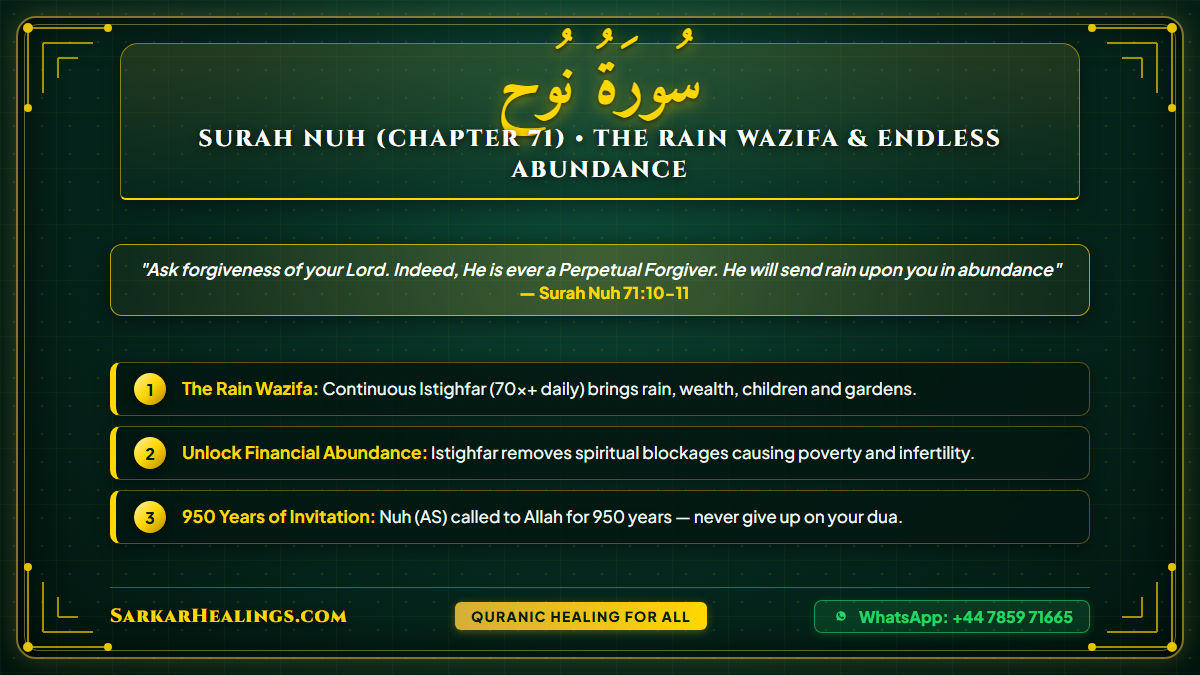
Surah Nuh Benefits: Authentic Virtues and Meaning
بِسْمِ اللَّهِ الرَّحْمَٰنِ الرَّحِيمِ
Surah Nuh — The Relentless Call
In brief: Surah Nuh recounts Prophet Noah’s patient invitation to his people, the power of seeking forgiveness, and the promise that those who turn to Allah after hardship are never left without aid. It is a source of protection, swift answer to du’a, and a means to earn lofty stations in Paradise.
In pain → Healing · Feeling unsafe → Protection · Want to understand it → Station & Meaning
Surah Nuh: Full Arabic Text With Plain-English Rendering
Read the complete surah below. Arabic: Uthmani script. English: plain section renderings for understanding (not a published translation).
بِسۡمِ ٱللَّهِ ٱلرَّحۡمَـٰنِ ٱلرَّحِیمِ إِنَّاۤ أَرۡسَلۡنَا نُوحًا إِلَىٰ قَوۡمِهِۦۤ أَنۡ أَنذِرۡ قَوۡمَكَ مِن قَبۡلِ أَن یَأۡتِیَهُمۡ عَذَابٌ أَلِیمࣱ
قَالَ یَـٰقَوۡمِ إِنِّی لَكُمۡ نَذِیرࣱ مُّبِینٌ
أَنِ ٱعۡبُدُوا۟ ٱللَّهَ وَٱتَّقُوهُ وَأَطِیعُونِ
یَغۡفِرۡ لَكُم مِّن ذُنُوبِكُمۡ وَیُؤَخِّرۡكُمۡ إِلَىٰۤ أَجَلࣲ مُّسَمًّىۚ إِنَّ أَجَلَ ٱللَّهِ إِذَا جَاۤءَ لَا یُؤَخَّرُۚ لَوۡ كُنتُمۡ تَعۡلَمُونَ
Verses 1-4. Nuh is sent to warn his people before a painful punishment.
قَالَ رَبِّ إِنِّی دَعَوۡتُ قَوۡمِی لَیۡلࣰا وَنَهَارࣰا
فَلَمۡ یَزِدۡهُمۡ دُعَاۤءِیۤ إِلَّا فِرَارࣰا
وَإِنِّی كُلَّمَا دَعَوۡتُهُمۡ لِتَغۡفِرَ لَهُمۡ جَعَلُوۤا۟ أَصَـٰبِعَهُمۡ فِیۤ ءَاذَانِهِمۡ وَٱسۡتَغۡشَوۡا۟ ثِیَابَهُمۡ وَأَصَرُّوا۟ وَٱسۡتَكۡبَرُوا۟ ٱسۡتِكۡبَارࣰا
ثُمَّ إِنِّی دَعَوۡتُهُمۡ جِهَارࣰا
ثُمَّ إِنِّیۤ أَعۡلَنتُ لَهُمۡ وَأَسۡرَرۡتُ لَهُمۡ إِسۡرَارࣰا
فَقُلۡتُ ٱسۡتَغۡفِرُوا۟ رَبَّكُمۡ إِنَّهُۥ كَانَ غَفَّارࣰا
یُرۡسِلِ ٱلسَّمَاۤءَ عَلَیۡكُم مِّدۡرَارࣰا
وَیُمۡدِدۡكُم بِأَمۡوَ ٰلࣲ وَبَنِینَ وَیَجۡعَل لَّكُمۡ جَنَّـٰتࣲ وَیَجۡعَل لَّكُمۡ أَنۡهَـٰرࣰا
Verses 5-12. His day-and-night call, and the promise: seek forgiveness and receive rain, wealth, and children.
مَّا لَكُمۡ لَا تَرۡجُونَ لِلَّهِ وَقَارࣰا
وَقَدۡ خَلَقَكُمۡ أَطۡوَارًا
أَلَمۡ تَرَوۡا۟ كَیۡفَ خَلَقَ ٱللَّهُ سَبۡعَ سَمَـٰوَ ٰتࣲ طِبَاقࣰا
وَجَعَلَ ٱلۡقَمَرَ فِیهِنَّ نُورࣰا وَجَعَلَ ٱلشَّمۡسَ سِرَاجࣰا
وَٱللَّهُ أَنۢبَتَكُم مِّنَ ٱلۡأَرۡضِ نَبَاتࣰا
ثُمَّ یُعِیدُكُمۡ فِیهَا وَیُخۡرِجُكُمۡ إِخۡرَاجࣰا
وَٱللَّهُ جَعَلَ لَكُمُ ٱلۡأَرۡضَ بِسَاطࣰا
لِّتَسۡلُكُوا۟ مِنۡهَا سُبُلࣰا فِجَاجࣰا
Verses 13-20. Reminders of creation — the heavens, moon, and growth from earth.
قَالَ نُوحࣱ رَّبِّ إِنَّهُمۡ عَصَوۡنِی وَٱتَّبَعُوا۟ مَن لَّمۡ یَزِدۡهُ مَالُهُۥ وَوَلَدُهُۥۤ إِلَّا خَسَارࣰا
وَمَكَرُوا۟ مَكۡرࣰا كُبَّارࣰا
وَقَالُوا۟ لَا تَذَرُنَّ ءَالِهَتَكُمۡ وَلَا تَذَرُنَّ وَدࣰّا وَلَا سُوَاعࣰا وَلَا یَغُوثَ وَیَعُوقَ وَنَسۡرࣰا
وَقَدۡ أَضَلُّوا۟ كَثِیرࣰاۖ وَلَا تَزِدِ ٱلظَّـٰلِمِینَ إِلَّا ضَلَـٰلࣰا
Verses 21-24. The people persist, clinging to their idols: Wadd, Suwa, Yaghuth, Yauq, and Nasr.
مِّمَّا خَطِیۤـَٔـٰتِهِمۡ أُغۡرِقُوا۟ فَأُدۡخِلُوا۟ نَارࣰا فَلَمۡ یَجِدُوا۟ لَهُم مِّن دُونِ ٱللَّهِ أَنصَارࣰا
وَقَالَ نُوحࣱ رَّبِّ لَا تَذَرۡ عَلَى ٱلۡأَرۡضِ مِنَ ٱلۡكَـٰفِرِینَ دَیَّارًا
إِنَّكَ إِن تَذَرۡهُمۡ یُضِلُّوا۟ عِبَادَكَ وَلَا یَلِدُوۤا۟ إِلَّا فَاجِرࣰا كَفَّارࣰا
رَّبِّ ٱغۡفِرۡ لِی وَلِوَ ٰلِدَیَّ وَلِمَن دَخَلَ بَیۡتِیَ مُؤۡمِنࣰا وَلِلۡمُؤۡمِنِینَ وَٱلۡمُؤۡمِنَـٰتِۖ وَلَا تَزِدِ ٱلظَّـٰلِمِینَ إِلَّا تَبَارَۢا
Verses 25-28. They are drowned; Nuh prays for the believers and asks forgiveness.
What Surah Nuh Is About
Surah Nuh, often nicknamed “Surah al‑Istighfar” (The Chapter of Seeking Forgiveness), centers on Prophet Noah’s ninety‑plus years of calling his people to monotheism despite relentless rejection. The narrative highlights his unwavering patience, the flood as a sign of divine justice, and the enduring lesson that turning back to Allah opens doors of mercy and provision.
The surah repeatedly links istighfar (seeking forgiveness) with rain, wealth, children, and relief from hardship, teaching believers that sincere repentance invites Allah’s blessings in every facet of life—material, spiritual, and familial.
The Benefits of Surah Nuh — Every Claim Sourced
🌿 Healing & Swift Answer to Du’a
- Any supplication made after reciting Surah Nuh is quickly answered.
- Recitation removes spiritual ailments caused by jinn influence and restores inner peace.
- Regular recital alleviates anxiety and brings calmness to the heart.
Those who recite Surah Nuh will receive a reward equal to the number of people who believed in Prophet Nuh (peace be upon him).
🛡️ Protection from Harm
- Recitation creates a shield against jinn, sorcery, unjust rulers, poverty, and starvation.
- It causes jinn to flee and secures the release of prisoners, victory in debates, and clearance of debts.
- The reward equals freeing slaves matching the total number of jinn and devils.
🌟 Elevated Station & Reward
- Those who never omit Surah Nuh gain a place among Allah’s favoured servants, receive three dwellings in Jannah instead of one, and are granted 200 houries (beautiful companions of Paradise).
- Reciting the surah in obligatory and supererogatory prayers keeps one in the company of Allah’s beloved in Paradise, amidst beautiful blessings.
- Whoever beseeches Allah for legitimate needs after reciting Surah Nuh sees those needs fulfilled without delay.
- Consistent recitation ensures one does not die until they glimpse their allotted place in Paradise.
🎁 General Reward & Virtue
- Reciters earn a reward equivalent to the number of believers in Prophet Nuh’s time.
- The surah acts as a means of ongoing charity (sadaqah jariyah) through the continuous seeking of forgiveness.
How and When to Use — Prescription
Before any use: seek refuge (isti’adhah), begin with Bismillah, recite with tarteel (measured pace), close with Ameen.
| When | How to Use | What It Does |
|---|---|---|
| Daily obligatory & supererogatory salah | Recite Surah Nuh after Al‑Fatihah in any rak‘ah | Keeps you among Allah’s favoured; brings Paradise’s blessings |
| When facing jinn disturbance or sorcery | Recite 3 times, blow on shoulders, seek refuge | Jinn flee; protection from occult harm |
| During financial hardship or debt | Recite 11 times after Maghrib, make du’a for provision | Alleviates poverty; assists debt clearance |
| Before an important debate or legal matter | Recite 7 times, then present your case | Secures victory and clarity of speech |
| When seeking swift answer to du’a | Recite once, then raise hands in supplication | Du’a is answered quickly |
How to Get Maximum Benefit
- Intention (niyyah) – Recite solely for Allah’s pleasure, not for show.
- Consistency – Make Surah Nuh part of your daily dhikr routine.
- Certainty (yaqeen) – Trust that Allah’s promises in the surah are true.
- Pairing – Combine recitation with istighfar and charity for multiplied reward.
Listen to Sheikh’s Recitation — Surah Nuh
Recited by Sheikh Sayed — listen with khushu, read along, then recite yourself. For personal recitation guidance, message on WhatsApp.
Frequently Asked Questions
Is the narration about reward equal to the number of believers in Prophet Nuh authentic?
The narration appears in Fawaid-e-Quran citing the Holy Prophet (S) and is reinforced by similar statements from Imam Ja’far as-Sadiq (a) in the same source. Multiple chains within the cited work give it a strong basis, though readers are encouraged to consult the original texts for full verification.
Can Surah Nuh be recited for protection against unjust rulers?
Yes. The authenticated traditions lists protection from unjust rulers among the benefits; reciting the surah with sincere intention creates a spiritual shield against oppression.
How many times should I recite Surah Nuh for debt clearance?
The Guide suggests reciting it 11 times after Maghrib while making a specific du’a for relief from debt; consistency amplifies the effect.
Does Surah Nuh guarantee worldly wealth?
No. The surah is a means through which Allah may grant provision; it does not promise guaranteed riches, as all outcomes are subject to divine will.
Where Surah Nuh Fits in Your Journey
If you are striving to deepen your reliance on Allah’s forgiveness, Surah Nuh offers a practical roadmap: its repeated call to istighfar trains the heart to turn back after every slip, while its promises of protection and swift du’a answers sustain you through trials. Let it be the chapter you return to when seeking both spiritual fortitude and tangible relief.
Cross-Links
- Wealth & Rizq Hub
- Children & Fertility Hub
- Forgiveness & Repentance Hub
- Continue with Surah Al-Ma’arij
- Continue with Surah Al-Jinn
- All 114 Surahs
Get the Dua of Surah Nuh for Enemies & Peace
WhatsApp Sheikh Sayed — Personal Guidance