Surah Al-Ala Benefits: Authentic Virtues and Meaning
بِسْمِ اللَّهِ الرَّحْمَٰنِ الرَّحِيمِ
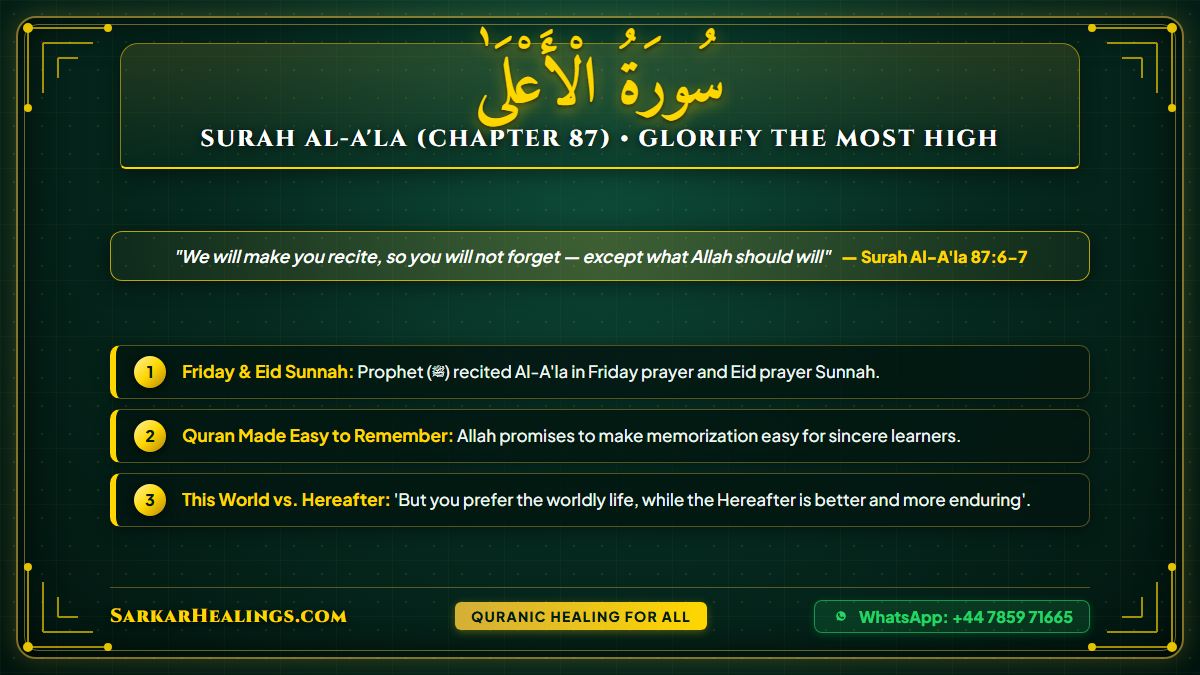
Surah Al‑A’lā — The Exalted Glory
In brief: Surah Al‑A’lā calls the believer to lift the heart above worldly distractions by glorifying Allah’s supreme perfection. Its short, rhythmic verses purify intention, ease physical discomfort, and open doors of mercy — both in this life and the next.
In pain → Healing · Feeling unsafe → Protection · Want to understand it → Station & Meaning
What Surah Al‑A’lā Is About
Surah Al‑A’lā, titled “The Most High,” is a Makki revelation that repeatedly urges the believer to proclaim Allah’s transcendence. The opening command to glorify the Lord’s name sets a tone of awe, reminding the heart that true success lies in aligning with the Divine perfection that surpasses all creation.
Classical exegetes nickname this chapter “Al‑Tasbīḥ” (the Glorification) because its core theme is the continuous declaration of Allah’s supremacy. By internalising this glorification, the soul is purified, the mind is cleared of doubt, and the believer is guided toward the everlasting abode where the Most High reigns.
The Benefits of Surah Al‑A’lā — Every Claim Sourced
🌿 Healing of Body and Spirit
- Relieves ear pain and other ailments.
- Eases molar tooth pain when recited over the affected area.
- Calms a screaming child or animal, soothing restless habits.
- Removes harmful effects or poison from food when blown over it.
Imam Ali (a) used to recite [Surah Al‑A’lā] often in compulsory prayers. Also good for relieving ear pains and other ailments.
🛡️ Protection from Harm and Spiritual Defilement
- Shields the reciter from the torment of the grave.
- Clears doubt and hypocrisy concerning the creed.
- Grants true repentance, erasing past shortcomings.
- Keeps the believer steadfast upon the Sunnah of the Prophet (S) at the moment of death.
🧭 Station & Meaning in the Hereafter
- Entitles the reciter to enter Jannah through whichever door he pleases.
- Acts as an intercessor on the Day of Judgment, bearing truthful witness for the believer.
- Bestows a reward equivalent to ten times the number of letters in the divine books revealed to the Prophet (S), Ibrahim (a) and Musa (a).
- Places the reciter among those who followed the Prophet’s (S) footsteps in noon prayers when combined with Surah al‑Jumuʿah and Surah al‑Munāfiqūn.
🎁 Additional Rewards and Virtues
- Reciting Surah Al‑A’lā in obligatory and supererogatory prayers earns the promise: “Enter paradise from whichever door you like.”
- Imam Ali ibn Abi Talib (a) recited it in his Isha prayer and urged frequent recitation for its blessings.
- Whoever reads it is regarded as having spent Laylat al‑Qadr awake in worship.
- Eases the accounting on Qiyāmah and showers Divine Mercy upon the reciter.
- Guides straying persons back to the right path.
The Messenger of Allah (S) said: “Whoever reads this Chapter will be regarded as though he had remained during Laylatul‑Qadr awake all night long worshipping his Lord. It is the one that will protect and save whoever recites it from the construction of the grave.”
How and When to Use — Prescription
Before any use: seek refuge (isti’adhah), begin with Bismillah, recite with tarteel (measured pace), close with Ameen.
| When | How to Use | What It Does |
|---|---|---|
| Daily five‑time prayers (Fajr, Dhuhr, Asr, Maghrib, Isha) | Recite Surah Al‑A’lā after Surah al‑Fātiḥah in the first rakʿah. | Establishes a habit of glorification, earns the reward of ten‑fold letters, and invites Divine Mercy. |
| When experiencing ear or tooth pain | Recite the surah three times, blow gently over the affected area. | Alleviates discomfort as narrated by Imam Ali (a). |
| For a crying child or restless animal | Recite softly near them, repeating seven times. | Calms the habit and soothes distress. |
| Before meals, to safeguard food | Recite once, then blow over the plate. | Removes harmful effects or poison. |
| When feeling doubtful about faith | Recite with contemplation, focusing on the meaning of “Most High”. | Clears doubt and hypocrisy, strengthening creed. |
How to Get Maximum Benefit
- Intention (niyyah): Recite solely for Allah’s pleasure, seeking His glorification and mercy.
- Consistency: Make Surah Al‑A’lā a regular part of your salah and daily dhikr.
- Certainty (yaqīn): Trust that the promises narrated are means through Allah’s grace, not guarantees of worldly outcomes.
- Pairing: Combine with Surah al‑Jumuʿah and Surah al‑Munāfiqūn in noon prayers to follow the Prophet’s (S) practice.
Listen to Sheikh’s Recitation — Surah Al-A’la
Recited by Sheikh Sayed — listen with khushu, read along, then recite yourself. For personal recitation guidance, message on WhatsApp.
Frequently Asked Questions
What is the main theme of Surah Al‑A’lā?
The surah calls believers to glorify Allah as the Most High, purifying the soul and directing focus toward the eternal abode.
Can Surah Al‑A’lā be recited for physical ailments?
Yes, narrations mention its use for relieving ear pain, molar tooth pain, and soothing screaming children or animals when recited with blowing.
Is the narration about entering Jannah through any door authentic?
The narration appears in multiple reputable sources — Fawaid‑e‑Quran and the Benefits of All 114 Surahs compilation — indicating a strong, well‑attested tradition.
How often should I recite it to gain the intercession benefit?
Sources suggest reciting it in both obligatory and optional prayers; regular, sincere recitation positions it as an intercessor on the Day of Judgment.
Where Al‑A’lā Fits in Your Journey
Surah Al‑A’lā serves as a luminous waypoint on the path of spiritual ascent. Its call to glorify the Most High lifts the believer above fleeting concerns, anchoring the heart in the reality of Divine perfection. By weaving its recitation into daily worship and moments of need, you cultivate a continual reminder that true success lies in aligning with the One who is exalted above all.
Cross-Links
- Forgiveness & Repentance Hub
- Knowledge & Success Hub
- Guidance & Istikhara Hub
- Continue with Surah At-Tariq
- Continue with Surah Al-Ghashiyah
- All 114 Surahs
Get the Complete Quran Coded Dua Taweez
WhatsApp Sheikh Sayed — Personal Guidance