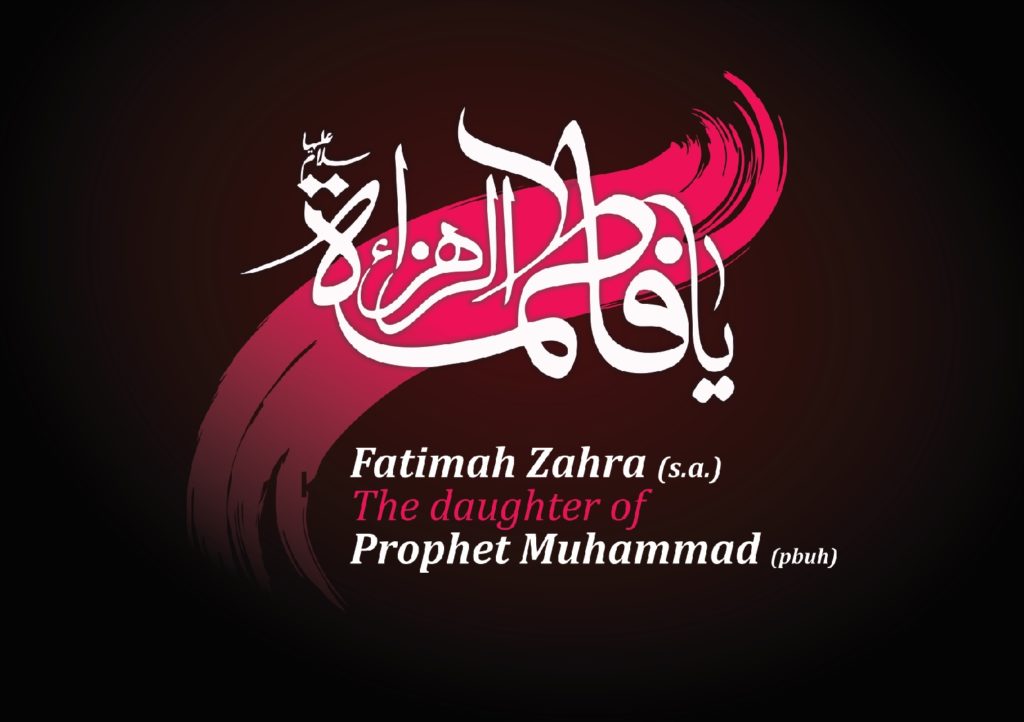
Virtues of Sayyidah Fatimah Salam-u-Allah Alaiha: The Beloved Daughter of Our Prophet ﷺ
Bismillah ir-Rahman ir-Raheem
There are figures in Islamic history whose light never dims — whose legacy continues to guide, inspire, and awaken the hearts of believers across centuries. Among the greatest of these luminaries is Sayyidah Fatimah al-Zahra Salam-u-Allah Alaiha — the beloved daughter of our Prophet Muhammad ﷺ, the wife of Sayyidna Ali (Radiyallahu Anhu), and the mother of Hasan, Husayn, Zaynab, and Umm Kulthum (Radiyallahu Anhum Ajmaeen).
She is not simply a historical figure. She is a living model of faith, devotion, sacrifice, and noble character. She is a mother, a daughter, a wife, a worshipper — and she is, as her beloved father declared, the leader of the women of Paradise.
This pillar post gathers the essential knowledge about the life, name, lineage, and blessed virtues of Sayyidah Fatimah (Salam-u-Allah Alaiha), drawing from authentic hadith narrations and the words of scholars. Whether you are a student of Islamic knowledge, a parent hoping to inspire your children, or a believer seeking closeness to the Prophet's ﷺ family — this guide is for you.
Table of Contents
- Who is Sayyidah Fatimah?
- The Meaning Behind Her Name
- Her Blessed Nicknames
- Her Early Life and First Steps in Islam
- Her Marriage and Noble Family
- The Virtues of Sayyidah Fatimah — Prophetic Testimony
- Hadith #1 — Leader of the Women of All Worlds
- Hadith #2 — The Secret Whispered Between Father and Daughter
- Lessons We Draw from Her Life
- Conclusion
Who is Sayyidah Fatimah?
Sayyidah Fatimah (Salam-u-Allah Alaiha) was the youngest and most beloved daughter of Prophet Muhammad ﷺ and Sayyidah Khadijah al-Kubra (Radiyallahu Anha). She was born five years before her father declared Prophethood, during the year in which the sacred Ka'bah was being rebuilt — a momentous time in Makkah's history, and a fitting backdrop for the arrival of such a blessed soul.
At the time of her birth, the Prophet ﷺ was 35 years old. She entered a world where the light of Islam had not yet been formally revealed, yet she would grow up to be among the very first to embrace that light.
She is not merely the daughter of a Prophet. She is the mother of the line of Prophethood that carries on through her sons — a blessed branch from which the Ahlul Bayt (the family of the Prophet ﷺ) springs forth. The Prophet ﷺ himself declared: "Fatimah is a part of me; whoever angers her, angers me." (Bukhari)
The Meaning Behind Her Name
The name Fatimah carries deep spiritual significance. It is derived from the Arabic root word "fitam" — meaning to wean or to keep away. In its most profound interpretation, Fatimah is the one who has been kept away from evil and bad character.
This is not merely a name — it is a description. From her birth to her passing, Sayyidah Fatimah (Salam-u-Allah Alaiha) embodied purity of character, nobility of conduct, and unwavering closeness to her Creator.
Scholars have noted that just as a child is weaned from milk and nourished by other sustenance, Sayyidah Fatimah was, through divine grace and her own effort, "weaned" from the vices and moral corruption that surrounded the society of her time. Her name is a prophecy fulfilled in her very life.
Her Blessed Nicknames
Sayyidah Fatimah (Salam-u-Allah Alaiha) was honoured with four beautiful nicknames, each one a window into her remarkable character:
1. Al-Zahraa — The Lady of Light
"Zahraa" means the radiant, the luminous, the one who shines. This name reflects the spiritual radiance that believers perceived in Sayyidah Fatimah — a light that came from her deep worship, her sincere piety, and her closeness to Allah ﷻ. Just as the sun illuminates the world, her example continues to illuminate the path of believers.
2. Al-Batool — The Pure and Devout
The title Batool holds a revered place in Islamic tradition. Historically, it was used to describe Sayyidah Maryam (Mary, mother of Isa/Jesus, peace be upon him) — a woman celebrated for her extraordinary devotion, her modesty, and her complete turning away from worldly distractions toward the worship of Allah ﷻ.
Sayyidah Fatimah was given this same title because her worship closely resembled that of Sayyidah Maryam — in depth, in sincerity, in modesty, and in the total surrender of her heart to the Divine. To be placed alongside Sayyidah Maryam in spiritual standing is itself one of her greatest honours.
3. Umm al-Hasan wal-Husayn — Mother of Hasan and Husayn
This title celebrates her role as the mother of two of the most beloved grandchildren of the Prophet ﷺ — Sayyidna Hasan and Sayyidna Husayn (Radiyallahu Anhuma). Through her motherhood, she nurtured two souls whose love for truth and whose sacrifice would shape the course of Islamic history forever.
4. Umm Abeeha — The Mother of Her Father
Of all her nicknames, this one is perhaps the most tender and the most extraordinary.
"Umm Abeeha" literally means "the mother of her own father." It was given to her by the Sahaba (Companions) and later affirmed by scholars — not as a biological description, but as a testament to the depth of her love and devotion for the Prophet ﷺ.
Just as a mother protects her child, stays by their side in illness, defends them against harm, and pours out her heart in their service — Sayyidah Fatimah did all of this for her father. When the Prophet ﷺ was wounded, she tended his injuries. When he was mocked, she stood firm. When he wept, she wept with him. When he needed comfort, she was there.
The love she had for her father was so vast, so selfless, and so all-encompassing, that the Sahaba themselves saw in her the image of a devoted mother. And so they called her Umm Abeeha — and the name has remained, a monument to a love unlike any other in human history.
Her Early Life and First Steps in Islam
Sayyidah Fatimah (Salam-u-Allah Alaiha) grew up in the household of Prophethood itself. She witnessed the early days of revelation, the persecution of the Muslims in Makkah, and the trials her father bore with patience and steadfastness.
At only 5 years of age, she embraced Islam — as soon as the Prophet ﷺ declared his Prophethood. This made her one of the earliest Muslims in history and, indeed, among the youngest believers ever recorded.
Consider what that means. At an age when most children are still learning about the world around them, Sayyidah Fatimah was already standing as a believer in the oneness of Allah ﷻ and the mission of the Seal of Prophets. Her faith was not inherited passively — it was lived actively, in the most difficult circumstances, in the very city where Islam was being fought.
She grew up watching her father persevere. She absorbed his patience. She imbibed his courage. And she became, as the Sahaba would later witness, the clearest human reflection of her father's character, his walk, and his love for the Deen.
Her Marriage and Noble Family
After the blessed Hijrah (migration) to Madinah, Sayyidah Fatimah (Salam-u-Allah Alaiha) was married to Sayyidna Ali ibn Abi Talib (Radiyallahu Anhu) — the cousin of the Prophet ﷺ, one of the earliest Muslims, and one of the most knowledgeable and courageous companions in Islamic history. Their marriage took place in the first year after the Hijrah.
Together, they built a household of faith, simplicity, and profound devotion. Their home was not filled with worldly riches — but it overflowed with barakah (divine blessing), with worship, and with the love of Allah ﷻ and His Messenger ﷺ.
From this union were born four children whose names resound across centuries:
- Sayyidna al-Hasan (Radiyallahu Anhu) — The elder son, beloved grandson of the Prophet ﷺ, and leader of the youth of Paradise.
- Sayyidna al-Husayn (Radiyallahu Anhu) — The younger son, martyr of Karbala, whose sacrifice became a beacon of justice and truth for all time.
- Sayyidah Zaynab (Radiyallahu Anha) — Daughter of eloquence, courage, and faith; her speech after Karbala remains one of the most powerful addresses in Islamic history.
- Sayyidah Umm Kulthum (Radiyallahu Anha) — A woman of piety and dignity, carrying the legacy of her blessed family with honour.
Each of these four children, as the scholars have affirmed, were "well-known for their piety, goodness, and generosity. Their strength of character and actions changed the course of history." The roots of that greatness were nurtured in the home of Fatimah al-Zahraa.
The Virtues of Sayyidah Fatimah — Prophetic Testimony
The greatest testimony to the rank of Sayyidah Fatimah (Salam-u-Allah Alaiha) comes not from any human opinion, but from the words of the Prophet Muhammad ﷺ himself — the most truthful of all creation, the one who does not speak from desire, but only by divine guidance.
Below are two of the most famous authenticated narrations affirming her exalted status:
Hadith #1 — Leader of the Women of All Worlds
Narrator: Sayyidah Ayeshah (Radiyallahu Anha)
During the final illness in which the Prophet ﷺ would pass from this world, he called his beloved daughter to him and said:
"O Fatimah! Are you not pleased with the fact that you are the leader of the women of all the worlds, the leader of the women of this Ummah (nation), and the leader of all the believing women?"
Sources: Hakim, al-Mustadrak (3:170, #4740) — declared Sahih (sound); supported by Dhahabi. Nasai, as-Sunan-ul-Kubra (4:251, #7078; 5:146, #8517). Ibn Sa'd, at-Tabaqat-ul-Kubra (2:247–248; 8:26–27). Ibn Athir, Usad-ul-Ghabah fi Ma'rifah as-Sahabah (7:218).
This hadith is profound on multiple levels. First, consider the timing — these words were spoken during the Prophet's ﷺ final illness, in the most solemn of hours, when every word carries the weight of a final testament. He chose, in those moments, to reassure and honour his daughter.
Second, consider the scope — he did not say "leader of the women of Makkah" or even "of the Arabs." He said the women of all the worlds — a declaration that transcends time and geography. From the first woman to the last, in every nation and every generation, Sayyidah Fatimah stands at the highest station.
Third, consider the emotional texture — a father on his deathbed, comforting his daughter with the greatest of gifts: not gold, not land, not worldly power — but the knowledge of her eternal rank before Allah ﷻ. This is the gift of the Prophets.
Hadith #2 — The Secret Whispered Between Father and Daughter
Narrator: Sayyidah Ayeshah (Radiyallahu Anha)
Sayyidah Ayeshah (Radiyallahu Anha) narrates a remarkable incident — one that she herself was present for, yet could not fully understand until much later:
"Fatimah (Radiyallahu Anha) came and her way of walking was just like that of the Holy Prophet ﷺ. The Holy Prophet ﷺ welcomed his beloved daughter Sayyidah Fatimah and seated her beside him. Then he whispered something to her, which made her cry. Then the Holy Prophet ﷺ whispered something to her again, and she laughed. 'I have never seen happiness so close to sadness as I have seen today,' said Sayyidah Ayeshah."
Sayyidah Ayeshah (Radiyallahu Anha) pressed Sayyidah Fatimah to reveal what the Prophet ﷺ had said — but she replied: "I cannot disclose the secret of the Messenger of Allah ﷺ."
Only after the Prophet ﷺ passed away did she finally reveal the two whispers:
The First Whisper (which caused tears): "Every year, Jibraeel (Alaihissalam) recites the entire Quran with me once — but this year he has recited it twice. I am certain that my time in this world has come to an end. And indeed, you will be the first from my family to come to me."
The Second Whisper (which brought laughter and joy): "Are you not happy with the fact that you are the leader of the women of Paradise — or the leader of all Muslim women?"
Sources: Bukhari, as-Sahih (3:1326–1327, #3426–3427); Muslim, as-Sahih (4:1904, #2450); Ahmad ibn Hanbal, al-Musnad (6:282).
This narration, authenticated in both Sahih al-Bukhari and Sahih Muslim — the two most rigorously verified hadith collections in Islamic scholarship — gives us an intimate, extraordinary window into the bond between the Prophet ﷺ and his daughter.
Several lessons pour forth from this account:
- Her gait was the gait of the Prophet ﷺ: Sayyidah Ayeshah (Radiyallahu Anha) begins by noting that Fatimah's very manner of walking was identical to that of the Prophet ﷺ. This is not a trivial observation. It speaks to the degree to which she had absorbed and embodied her father's character — in mannerism, in bearing, in presence. The outer reflects the inner.
- Her loyalty was absolute: When asked what the Prophet ﷺ had whispered, Sayyidah Fatimah refused to disclose it — not out of coldness, but out of complete devotion. The Prophet's ﷺ words were a trust. She would not betray that trust even under gentle questioning. Only after his passing — when the secret no longer belonged only to the living — did she share it.
- Grief and joy can live together in a believing heart: Sayyidah Ayeshah (Radiyallahu Anha) marvelled at what she witnessed: tears followed immediately by laughter — sorrow at the impending loss of her father, and joy at the station Allah ﷻ had ordained for her. This is the emotional reality of Iman — it does not flatten experience, but deepens it.
- The first of the family to follow him: The Prophet ﷺ told her she would be the first from his family to join him in the Hereafter. True to this, Sayyidah Fatimah (Salam-u-Allah Alaiha) passed away approximately six months after the Prophet ﷺ — the earliest among his close family to depart this world. His promise was fulfilled.
Lessons We Draw from Her Life
The life of Sayyidah Fatimah (Salam-u-Allah Alaiha) is not a museum exhibit. It is a living, breathing guide for believers in every age. Here are some of the enduring lessons she leaves us:
- Faith is not inherited — it is chosen: She became a Muslim at five years old, during the most hostile period for Islam in Makkah. Faith, for her, was never comfortable or convenient. It was a conscious, courageous choice.
- The greatest love is devotion to Allah ﷻ and His Messenger ﷺ: Her nickname Umm Abeeha tells us that her love for her father was so selfless, so deep, that it transcended ordinary categories. To love the Prophet ﷺ as she did — through every difficulty and every sacrifice — is the highest standard of prophetic love.
- Worship is the measure of a person: She was called Batool — like Maryam — because of the quality of her worship. In an age when status was often measured by lineage or wealth, her distinction came from the depth of her connection to her Creator.
- A believing home raises believing children: From her marriage with Sayyidna Ali (Radiyallahu Anhu) came four children who reshaped history. The mother is the first school. What she planted in Hasan, Husayn, Zaynab, and Umm Kulthum did not die with her — it continues to inspire the Ummah.
- Keeping the secrets of trust is a form of worship: When she refused to reveal the Prophet's ﷺ whisper to Sayyidah Ayeshah, she demonstrated that loyalty and trust are sacred — not to be compromised even by social pressure.
- The rank of women in Islam is exalted: The Prophet ﷺ declared his own daughter the leader of the women of all worlds. This is the true Islamic view of womanhood — honoured, elevated, and celebrated in the highest terms. Sayyidah Fatimah is the proof.
Conclusion
Sayyidah Fatimah al-Zahraa (Salam-u-Allah Alaiha) lived a short life by worldly measures — she passed away in her mid-twenties, just months after the Prophet ﷺ. Yet the depth and breadth of what she left behind is immeasurable.
She is the daughter whose footsteps matched her father's. The wife who built a home of faith on very little. The mother who gave the Ummah four pillars of history. The worshipper whose devotion rivalled Sayyidah Maryam's. The believer who kept her faith in the most difficult of times. And the woman whom the Prophet ﷺ himself — the most truthful of all creation — declared the leader of the women of all worlds and the leader of the women of Paradise.
To know her is to know the very best of what Islam offers to humanity. To reflect on her virtues is to rekindle the love of the Prophet ﷺ and his blessed family in our hearts. And to follow her example — in faith, in worship, in love, in loyalty — is to walk the path that leads to the highest gardens of Jannah.
May Allah ﷻ fill our hearts with love for Sayyidah Fatimah al-Zahraa (Salam-u-Allah Alaiha), for her father the Prophet ﷺ, and for all the Ahlul Bayt. And may He unite us with them in the highest stations of Paradise. Ameen.
"Fatimah is a part of me; whoever angers her, angers me." — Prophet Muhammad ﷺ (Sahih al-Bukhari)
Related Reading: Our Beloved Prophet Muhammad ﷺ | Hazrat Fatimah (Radiyallahu Anha) — Wikipedia
This article is intended as an act of love and respect for the Ahlul Bayt. All hadith references have been cited from authenticated classical sources. May Allah ﷻ accept it.
📖 Continue Your Islamic Healing Journey
- 12 Prophetic Foods & Their Benefits | Sarkar Healings
- 6 Durood Salawat Benefits for Wealth and Business.
- Allah’s love for his creation – This Hadith Can Shed Your Tears
- Prophetic Way to Cure for depression in islam
- Countless Virtues of Ahle Bayt Family of Prophet
- Mawlid un-Nabi Sallallahu alaihi wa Sallam ? Yes We Do
- Mawlid an Nabawi Sharif – Great Scholars Views
- Virtues of Sayyidah Fatimah The Lady of Light
- Prophetic Guidance on health with perfume
- 9 HADITH ON SADAQAH CHARITY, Best Protection