Surah Nisa Benefits
بِسْمِ اللهِ الرَّحْمنِ الرَّحِيمِ
In The Name of Allah, The Beneficent, The Merciful
| Sura : Madani | by Tilawat : 4 | by Reveal : 92 | Ruku` : 24 | Ayats : 176 | Part No. : 4, 5, 6 |

(The Women) No.4 (177 verses)
Surah Nisa Benefits are many few will discuss in the article.
Surat Nisa contains 177 verses, was revealed in Medina. Next to Surat Al-Baqarah, it is the longest Surat of the Qur’an from the point of the number of words and letters. Surat An-Nisa is the surat that calls for justice and mercy, especially with vulnerable in society.
This Surat to teach us that the one who is entrusted with earth should be endowed with justice and mercy in his relationship with the society he is responsible for. It is as if the first attribute that should characterize those who carry this responsibility is justice.
Accordingly, this surat deals with the rights of the vulnerable groups in society such as: orphans, slaves, servants, heirs, and more importantly, women.
The surat also deals with non-Muslim minorities who live under the protection of Islam and speaks of their rights. In addition, surah An-Nisa addresses the vulnerable themselves showing them how to behave in different situations. The surah also refers to wayfarers and parents and how they should be treated. Therefore, surat An-Nisa the surah of mercy and justice.
As we all know, the Quran is the book of Allah, and it is a complete guidance for us. It has all the commandments and laws.
Surat An-Nisa does not only address the issues of women, but it also gives us the direction how to deal with a different situation. It has laid down for us, a complete guidance, laws relating marriages, Orphans, Jihad, legal practices, how Muslim communities should live together, and much more. Another aspect of this Surat is, that it encourages Muslims to stand for justice and always help the weak.
Surah Nisa: The Surah of Love
Surah Nisa of the Holy Quran is often referred to as the Surah of Love. This Surah contains a number of verses that carry special significance when it comes to love between two people. In this blog post, we will discuss the many benefits of reciting and reflecting on Surah Nisa, and how it can help foster stronger feelings of love and connection between two people. By understanding the benefits of Surah Nisa, couples can use the verses of the Quran to bring them closer together in a strong and healthy relationship.
What is Surah Nisa benefits?
Surah Nisa, also known as An-Nisa, is the fourth chapter of the Holy Quran. It consists of 176 verses and is one of the longest chapters in the Quran. This chapter focuses on various topics related to relationships between two people, such as marriage, divorce, guardianship, and inheritance. The title An-Nisa, which means “women” in Arabic, reflects the importance of women in society and their rights as outlined in this chapter. Surah Nisa also contains many stories from past generations, which serve to further educate us on the beauty and power of relationships. In short, Surah Nisa is a great source of guidance for strengthening the bond between two people, whether they are married or just friends.
What are the benefits of Surah Nisa?
Surah Nisa is the fourth chapter of the Holy Quran, and it is known to bring about strong relationships between two people. It is said that the recitation of this chapter can bring love and harmony in any relationship. Surah Nisa has many benefits which can be applied to strengthen the bond between two people.
Firstly, Surah Nisa teaches us about respect for each other. It emphasizes on treating others with kindness and understanding, even if there are differences between two people. This helps in building a strong and lasting relationship between two people.
Another benefit of Surah Nisa is that it encourages us to work together for the common good. This helps to create a sense of unity in a relationship and encourages partners to strive for mutual benefit.
Surah Nisa also teaches us about patience and perseverance in relationships. It reminds us to be understanding and forgiving towards each other when things don’t go as planned. It helps us to remain loyal to each other, no matter what obstacles may arise.
Finally, Surah Nisa promotes love and compassion between two people. This helps to create a strong bond between them and keeps them connected to each other. The Holy Quran has many verses related to this topic, and by following its guidance, we can ensure that our relationships remain strong and happy.
Overall, Surah Nisa provides numerous benefits for relationships. By following its teachings, we can make sure that our relationships remain strong and lasting.
Surah Nisa benefits: The most common Wazifa of Surat Nisa is,
- If there is any misunderstanding between Husband and Wife, the one who wants to clear this misunderstanding must recite this Surah continuously for seven days, one time a day. Any misunderstanding between Husband and Wife will be eliminated and Love between them will become stronger.
Which is the Best Surah for Marriage?
Recite Suraah Nisa daily 21 times for Ease in Marriage, ease in childbirth
Surah Nisa for husband love is Best?
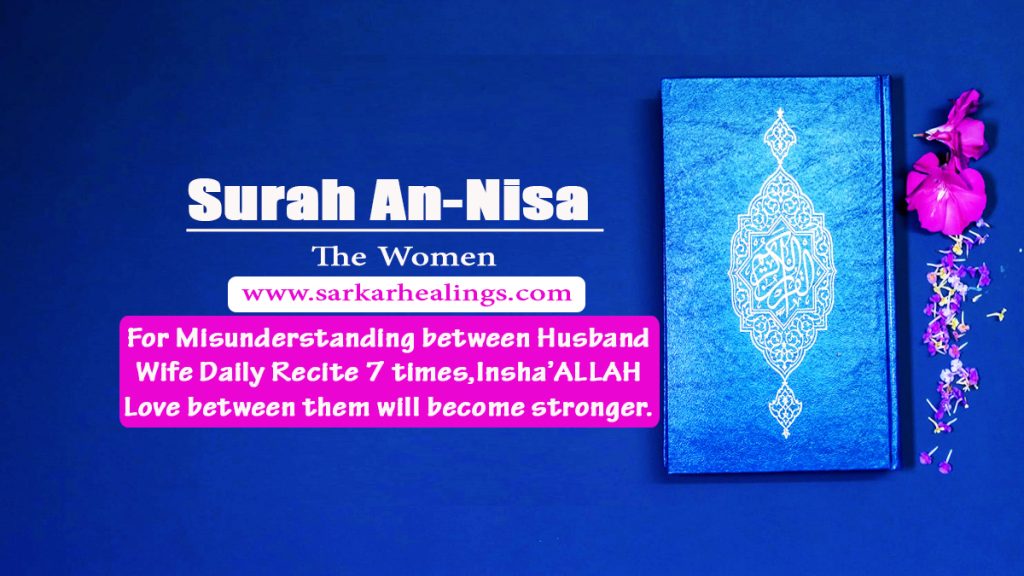
Daily Recite Suratul Nisa 7 times for love between Husband and wife or any two people.
What are the benefits of Nisa?
- Suratul Nisa is a remedy for distress, hardship
- Whosoever Recite Suratul Nisa daily, will get Safety from squeezing in the grave.
Which surah is powerful for protection?
If a written Naqsh Taweez of Surah Nisa is hanged on any of the walls of the home, that home will be safe from every danger.
Surah Nisa benefits are many, few are given below
1) Daily Recite 7 times for for love between two people.
2) Whoso ever Recite Surah An-Nisa daily, will get Safety from squeezing in the grave.
3) If a written Naqsh of Surat Nisa is hanged on any of the walls of home, That home will be safe from every danger.
Those who want Taweez, Naqash of Surah Nisa benefits, please send contact by email- sarkarhealing@gmail.com or WHATSAPP
Read ISLAMIC NAME Etiquette Of Naming New Born Babies
FOR VARIOUS QURANIC TAWEEZ OF SURAH, CLICK HERE
- Surah Hajj Benefits Chapter 22 Quran
- Surah Fatiha Benefits: Complete Guide to Healing, Mental Health
- Surah Baqarah Benefits are Unlimited Chapter 2
- 5 Amazing Benefits of Surah Al Imran Secrets Virtues Chapter 3
- Surah Nisa Benefits For Marriage Chapter 4
- Virtues Secrets Benefits of Surah Maidah for Marriage Chapter 5
- 6 Surah Anam Benefits
- Virtues Secrets Benefits of Surah Al Araf Chapter 7
- Surah Anfal Benefits, Virtues Secrets Chapter 8 of Quran E Majeed
- Surah Taubah Benefits Virtues Secrets Chapter 9