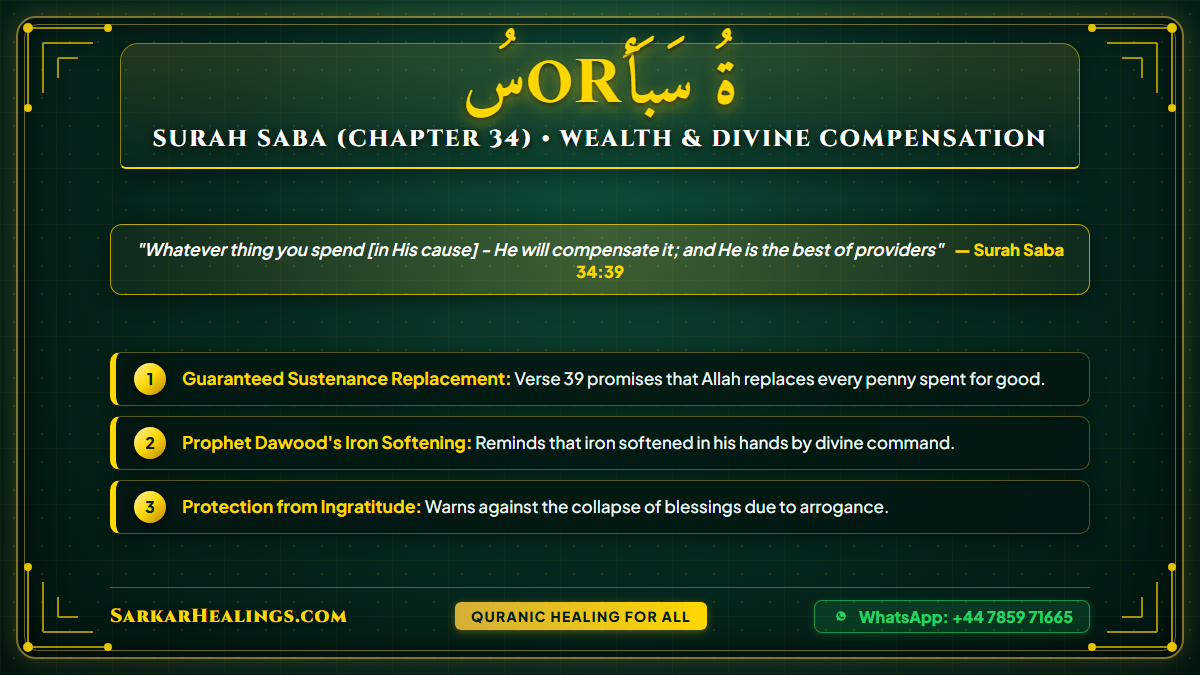
Surah Saba Benefits: Authentic Virtues, Rewards &…
بِسْمِ اللَّهِ الرَّحْمَٰنِ الرَّحِيمِ
الْحَمْدُ لِلَّهِ الَّذِي لَهُ مَا فِي السَّمَاوَاتِ وَمَا فِي الْأَرْضِ وَلَهُ الْحَمْدُ فِي الْآخِرَةِ وَهُوَ الْحَكِيمُ الْخَبِيرُ
Surah Saba — The Chapter of Gratitude and Divine Provision
In brief: If you seek inner calm, divine safeguard, and a hopeful vision of the Hereafter, Surah Saba offers a concise spiritual toolkit rooted in gratitude, protection, and the promise of meeting the Prophets on the Day of Judgement.
In pain → Healing · Feeling unsafe → Protection · Want to understand it → Station & Meaning
الْحَمْدُ لِلَّهِ الَّذِي لَهُ مَا فِي السَّمَاوَاتِ وَمَا فِي الْأَرْضِ وَلَهُ الْحَمْدُ فِي الْآخِرَةِ وَهُوَ الْحَكِيمُ الْخَبِيرُ
Translation: “All praise is due to Allah, to whom belongs whatever is in the heavens and whatever is on the earth, and to Him belongs praise in the Hereafter, and He is the Wise, the Acquainted.”
Qur’an 34:1
What Surah Saba Is About
Surah Saba, the thirty‑fourth chapter of the Qur’an, takes its name from the ancient people of Saba (the Yemenite kingdom renowned for its wealth and ingenuity). The surah opens with a declaration of divine praise and proceeds to recount the blessings bestowed upon the family of Prophet Dawud (David) — their gratitude, their just rule, and the abundant provision Allah granted them. It serves as a reminder that true prosperity flows from thankfulness to the Creator.
The central themes of the surah are the apportioning of sustenance by Allah, the certainty of the Resurrection and accountability, and the contrast between those who acknowledge Allah’s favors and those who turn away in arrogance. By reflecting on the story of Saba, the believer is encouraged to cultivate gratitude, trust in divine decree, and prepare sincerely for the reckoning.
The Benefits of Surah Saba — Every Claim Sourced
🌿 Healing…
- Removes fear from the heart and instills inner peace when recited or its water is drunk.
- Wearing the surah as a talisman or drinking its water eliminates fear and protects against enemies and wild animals.
- Washing the surah from a china plate over the face dispels fear and brings calmness.
- Reciting Surah Saba together with Surah Fatir at night or morning brings complete divine protection, alleviating anxiety.
🛡️ Protection…
- Reciting Surah Saba at night places the reciter under Allah’s protection throughout the night.
- Reciting Surah Saba in the morning ensures divine protection throughout the day.
- When written on paper and worn around the neck, beasts of prey will not attack the wearer.
- Reciting Surah Saba with Surah Fatir provides complete divine protection and smooth accounting on the Day of Judgement.
🌟 Station & Meaning…
- On the Day of Judgement, all Prophets and Messengers will come to meet the one who recites Surah Saba.
- The reward for nightly recitation is so great that seeing it in the book of deeds fills the heart with joy.
- Reciting Surah Saba leads to a smooth accounting and smooth sailing on the Day of Judgement.
- The recompense in this world and the hereafter for its recitation is beyond imagination.
How and When to Use — Prescription
Before any use: seek refuge (isti’adhah), begin with Bismillah, recite with tarteel (measured pace), close with Ameen.
| When | How to Use | What It Does |
|---|---|---|
| Daily prayers (Salah) | Recite Surah Saba after Al‑Fatihah in any rak’ah. | Earns the rewards of protection, joy, and the promise of meeting the Prophets on Qiyamah. |
| Nighttime (after ‘Ishā’) | Recite Surah Saba before sleep, preferably with tarteel. | Places the reciter under Allah’s protection all night; the heart is filled with joy when the deed is seen. |
| Morning (after Fajr) | Recite Surah Saba after the obligatory prayer. | Ensures divine protection throughout the day and safety from beasts and enemies. |
| Feeling fear or anxiety | Drink water that has been infused with the surah (write it on paper, wash in a china plate) or wear it as a talisman. | Removes fear from the heart, brings calmness, and guards against wild animals and hostile people. |
| Seeking safety while travelling | Write Surah Saba on a clean piece of paper and tie it around the neck or keep it in a pouch. | Beasts of prey will not attack the wearer; the individual remains under divine safeguard. |
How to Get Maximum Benefit
- Intention (niyyah) – Begin with a sincere desire to seek Allah’s protection, gratitude, and closeness to the Prophets.
- Consistency – Recite the surah regularly, e.g., each night after ‘Ishā’ or each morning after Fajr, to let its blessings accumulate.
- Certainty (yaqeen) – Trust that Allah’s promise is true; doubt weakens the spiritual effect.
- Pairing with Surah Fatir – As noted in the sources, reciting Surah Saba together with Surah Fatir amplifies divine protection and ensures smooth accounting on the Day of Judgement.
Listen to Sheikh’s Recitation — Surah Saba
Recited by Sheikh Sayed — listen with khushu, read along, then recite yourself. For personal recitation guidance, message on WhatsApp.
Frequently Asked Questions
What is the best time to recite Surah Saba for protection?
The sources indicate that reciting Surah Saba at night places one under Allah’s protection throughout the night, and reciting it in the morning ensures protection throughout the day. Either time fulfills the protective promise.
Can women recite Surah Saba during menstruation?
There is no Qur’anic prohibition preventing women from reciting any surah during menstruation; thus Surah Saba may be recited at any time, irrespective of ritual state.
Is it permissible to wear the surah as a talisman?
The narrations mention wearing the surah on paper around the neck as a means to remove fear and keep safe from enemies and wild animals, indicating permissibility of this practice as a means of seeking Allah’s aid.
How does Surah Saba relate to gratitude and provision?
The surah opens with praise to Allah and recounts the blessings granted to the family of Prophet Dawud, emphasizing that true provision comes from gratitude to the Creator. It reminds believers to acknowledge Allah’s favors and to trust in His apportionment of sustenance.
Where Surah Saba Fits in Your Journey
If you are building a daily routine of Qur’anic reflection, let Surah Saba be the chapter that renews your sense of thankfulness, shields you from unseen anxieties, and points your heart toward the blessed meeting with the Prophets on the Day of Judgement. Pair it with Surah Fatir for amplified protection, and let its verses accompany your morning and evening adhkar as a steady reminder that all provision flows from Allah’s mercy.
Cross-Links
- Wealth & Rizq Hub
- Forgiveness & Repentance Hub
- Guidance & Istikhara Hub
- Continue with Surah Al-Ahzab
- Continue with Surah Fatir
- All 114 Surahs
Get the Complete Quran Coded Dua Taweez
WhatsApp Sheikh Sayed — Personal Guidance