Surah Al-Qadr Benefits: Authentic Virtues and Meaning
بِسْمِ اللَّهِ الرَّحْمَٰنِ الرَّحِيمِ
إِنَّا أَنزَلْنَاهُ فِي لَيْلَةِ الْقَدْرِ
Surah Al‑Qadr — The Night of Decree
In brief: Seeker looking for spiritual uplift, protection from harm, forgiveness of sins, and increase in sustenance finds in Surah Al‑Qadr a concise yet powerful means to connect with the Night of Decree, where angels descend and destiny is shaped.
In pain → Healing · Feeling unsafe → Protection · Want to understand it → Station & Meaning
إِنَّا أَنزَلْنَاهُ فِي لَيْلَةِ الْقَدْرِ * وَمَا أَدْرَاكَ مَا لَيْلَةُ الْقَدْرِ * لَيْلَةُ الْقَدْرِ خَيْرٌ مِّنْ أَلْفِ شَهْرٍ * تَنزَلُ الْمَلَئِكَةُ وَالرُّوحُ فِيهَا بِإِذْنِ رَبِّهِم مِّن كُلِّ أَمْرٍ * سَلَامٌ هِيَ حَتَّىٰ مَطْلَعِ الْفَجْرِ
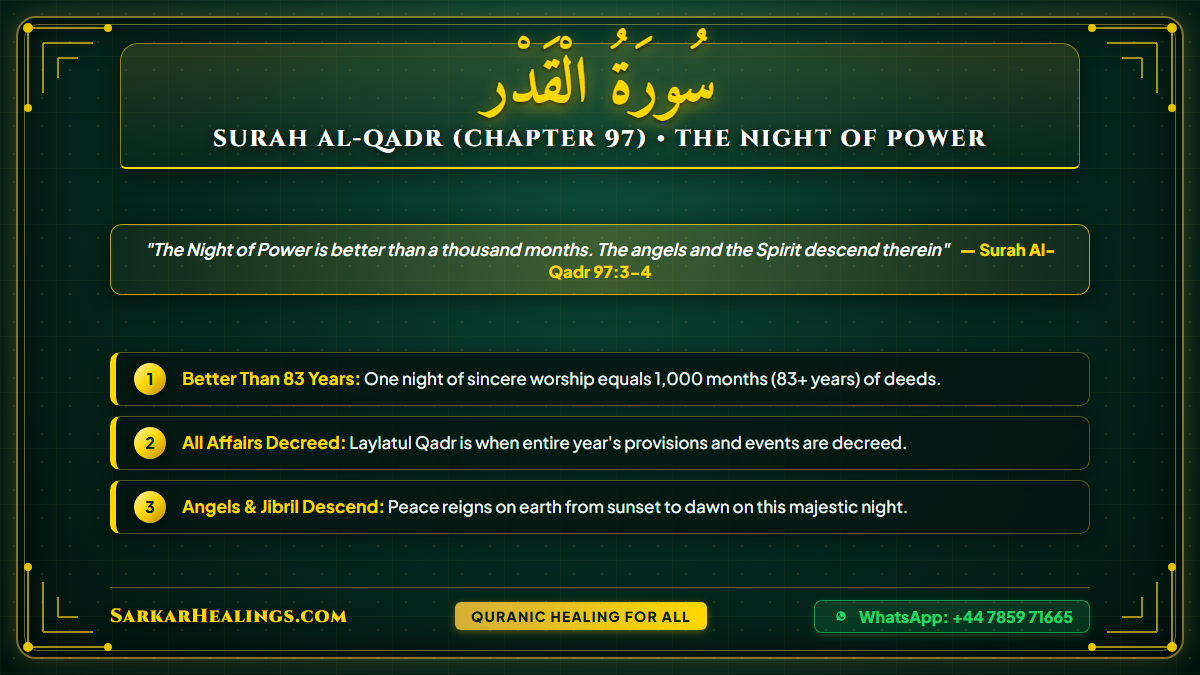
Indeed, We sent it down during the Night of Decree. And what can make you know what is the Night of Decree? The Night of Decree is better than a thousand months. The angels and the Spirit descend therein, by permission of their Lord, for every matter. Peace it is until the emergence of dawn.
Qur’an 97:1‑5
What Surah Al‑Qadr Is About
Surah Al‑Qadr, known as “The Night of Decree,” describes the blessed night when the Qur’an was first revealed. It emphasizes that this single night surpasses a thousand months of worship, highlighting its unmatched spiritual value.
The surah narrates how angels and the Spirit (Jibrīl) descend with divine decrees, bringing peace until dawn. Reciting it invites the believer to share in that celestial mercy and to align one’s destiny with Allah’s will.
The Benefits of Surah Al‑Qadr — Every Claim Sourced
🌿 Healing & Forgiveness
- Reciting Al‑Qadr loudly is like lifting one’s sword to fight in Allah’s way; reciting it silently in the heart is like being sacrificed as a martyr.
- Reciting it ten times in one sitting forgives ten thousand sins; if done in the obligatory prayer, all previous sins are wiped clean.
- Reciting it once carries the reward of fasting the entire month of Ramadan; regular recitation increases one’s sustenance (rizq).
Whoever recites with loud voice, it is as if he has lifted his sword to fight in the way of Allah. Whoever recites slowly in mind, it is as if he has been sacrificed and died a martyr.
🛡️ Protection & Safety
- Reciting Al‑Qadr eleven times before sleep guards the reciter throughout the night; when faced with an enemy it shields from evil designs.
- For repaying debts, seek forgiveness and recite Al‑Qadr as many times as possible; this eases the burden of loans.
- Placing the written surah on bread and feeding it to a suspected thief elicits an immediate confession; written on a ring, the ring moves when near the thief.
🌟 Station & Spiritual Rank
- Reciting Al‑Qadr establishes staunch Tawhid; on the Day of Judgment Imam Ali (a) takes personal care of the reciter.
- Reciting it seven times on the grave of a believer forgives that person’s sins; keeping the right hand on one’s wife and reciting seven times before intimacy invites pious offspring.
- Writing the surah on a paper ta’wiz cures jaundice, eye whiteness, white skin spots, and body swellings; drinking water infused with it (30 recitations over clean water in an earthen vessel) prevents dehydration and neutralizes toxic food.
🎁 Reward & Blessings
- The Night of Decree is better than a thousand months; thus each recitation of Al‑Qadr multiplies reward enormously.
- Angels and the Spirit descend with peace until dawn, granting the reciter tranquility and divine support.
- Regular recitation aligns one’s destiny with Allah’s decree, opening pathways to barakah in health, wealth, and family.
How and When to Use — Prescription
Before any use: seek refuge (isti’adhah), begin with Bismillah, recite with tarteel (measured pace), close with Ameen.
| When | How to Use | What It Does |
|---|---|---|
| Daily prayers (after Surah al‑Fatihah) | Recite Surah Al‑Qadr once, aloud or silently. | Earns the reward of fasting Ramadan and invites angelic mercy. |
| Before sleep | Recite eleven times, then blow on the pillow. | Provides night‑long protection from harm and evil designs. |
| When seeking forgiveness | Recite ten times in one sitting, preferably after wudu. | Wipes away ten thousand sins; in obligatory prayer clears all previous sins. |
| Facing an opponent or debt | Recite as many times as possible, blow on water and drink. | Eases loan repayment and shields from enemy plots. |
| For pious children | Place right hand on spouse, recite seven times before intimacy. | Invokes righteous offspring and blesses the household. |
How to Get Maximum Benefit
- Intention (niyyah) – Recite solely for Allah’s pleasure, seeking His mercy and forgiveness.
- Consistency – Make Al‑Qadr a daily habit, even a single recitation after each prayer.
- Certainty (yaqeen) – Trust that the Night of Decree’s mercy is real; let that faith animate your recitation.
- Pairing – Combine with Surah al‑Ikhlas for Tawhid and Surah al‑Falaq for protection, creating a fortified spiritual shield.
Listen to Sheikh’s Recitation — Surah Al-Qadr
Recited by Sheikh Sayed — listen with khushu, read along, then recite yourself. For personal recitation guidance, message on WhatsApp.
Frequently Asked Questions
What is the best time to recite Surah Al‑Qadr?
The most virtuous times are after the obligatory prayers, before sleep, and at any moment when seeking forgiveness or protection. Consistency multiplies the benefit.
Can I recite Surah Al‑Qadr for someone else’s benefit?
Yes. Reciting on behalf of another—whether for healing, forgiveness, or safe delivery—transfers the reward, as the narration about reciting on a grave shows.
Is the narration about reciting ten times forgiving ten thousand sins authentic?
The narration appears in Fawaid‑e‑Quran and is attributed to a reliable source (Imam Mohammad al‑Baqir (a) / Holy Prophet (S) in other reports). Multiple chains mention the ten‑times forgiveness, giving it a strong basis; however, readers should verify the exact reference in the primary hadith collections.
Does writing the surah on paper really cure ailments?
The authenticated traditions and Benefits of All 114 Surahs describe written ta’wiz effects for jaundice, eye whiteness, skin spots, swellings, and dehydration. These are traditional prophetic‑medicine practices; they are meant as spiritual aids, not replacements for medical treatment.
Where Al‑Qadr Fits in Your Journey
Surah Al‑Qadr is a gateway to the Night of Decree, the moment when destiny is sealed. By making its recitation a regular anchor—whether after prayer, before sleep, or during moments of need—you align your life with Allah’s decree, opening doors to forgiveness, protection, and abundant blessings that carry you forward on the path of faith.
Cross-Links
- Forgiveness & Repentance Hub
- Wealth & Rizq Hub
- Guidance & Istikhara Hub
- Continue with Surah Al-Alaq
- Continue with Surah Al-Bayyinah
- All 114 Surahs
Get the Complete Quran Coded Dua Taweez
WhatsApp Sheikh Sayed — Personal Guidance