Surah An-Naba Benefits: Authentic Virtues and Meaning✓ E-E-A-T Verified·Last Updated: August 24, 2026·Reviewed by Sheikh Sayed Shah QadriSurah An-Naba (The Great News) — Virtues, Benefits & Spiritual Practice
Surah An-Naba opens the final juz of the Qur’an with a summons to reflect on the Resurrection — “the great news” (النبإ العظيم) about which people differ. Its forty verses move from the signs of creation (earth, mountains, sleep, night, day, heavens, rain, vegetation) to the vivid realities of the Day of Decision. The authentic “benefit” of this surah is not a transactional formula but the Qur’anic benefit itself: it re-orients the heart toward the Hereafter, strengthens certainty (yaqin), and, like every surah, carries the general reward of recitation established in the Sunnah.
What the Surah Is About
Surah An-Naba opens the final juz of the Qur’an with a summons to reflect on the Resurrection — “the great news” (النبإ العظيم) about which people differ. Its forty verses move from the signs of creation (earth, mountains, sleep, night, day, heavens, rain, vegetation) to the vivid realities of the Day of Decision. The authentic “benefit” of this surah is not a transactional formula but the Qur’anic benefit itself: it re-orients the heart toward the Hereafter, strengthens certainty (yaqin), and, like every surah, carries the general reward of recitation established in the Sunnah.
Revealed in Makkah, Surah An-Naba (Chapter 78) is a concentrated argument for the Resurrection. The opening verses (عَمَّ يَتَسَاءَلُونَ * عَنِ النَّبَإِ الْعَظِيمِ — “About what are they asking one another? About the great news…”) frame the entire surah as a response to denial. Allah then marshals the observable world — the earth as a bed, mountains as pegs, pairs in creation, sleep for rest, night as a garment, day for livelihood, seven strong heavens, a blazing lamp (the sun), rain from clouds, grain and vegetation — as proofs that the One who originated all this is fully able to bring the dead back to life (78:6–16).
The second half depicts the Day of Decision (يَوْمِ الْفَصْلِ): the trumpet blast, the heavens opening like doors, mountains vanishing like a mirage, and the final abodes — gardens and springs for the God-conscious (الْمُتَّقِينَ), and a blazing fire for the deniers (78:17–40). The surah closes with the wish of the disbeliever to be dust, a moment of absolute regret.
Authentic Virtues (Graded)
| Claim / Virtue | Grade | Evidence & Notes |
|---|---|---|
| The surah’s central theme — the Resurrection and the signs of creation as its proof — is established by the Qur’an itself. | B | Qur’an 78:1–40. This is a Qur’anic virtue: reciting it means reciting the very arguments Allah gave for the Hereafter. |
| Enumeration of Allah’s favours (earth, mountains, pairs, sleep, night, day, heavens, sun, rain, vegetation) as evidence of the Reckoning. | B | Qur’an 78:6–16. Classical tafsir (Ibn Kathir, al-Tabari, al-Qurtubi) seek healing fors these verses as a complete cosmological proof of Resurrection. |
| General reward of Qur’an recitation: ten good deeds for every letter. | A | Hadith: “Whoever recites a letter from the Book of Allah…” (Tirmidhi 2910 ; also in Darimi, al-Sunan al-Kubra of al-Bayhaqi). Applies to Surah An-Naba as to every surah. |
| Intercession of the Qur’an for its companion on the Day of Judgement. | B | Theme established by authentic hadith: “Recite the Qur’an, for it will come on the Day of Resurrection as an intercessor for its companions” (Muslim 804). Surah An-Naba shares this general virtue. |
Famous but Weak / Unsubstantiated Claims (Honest Grading)
| Claim | Grade | Assessment |
|---|---|---|
| “Recite Surah An-Naba X times for relief from grief / debt / illness / to see the Prophet ﷺ in a dream / for a specific worldly need.” | C | No authentic chain supports numeric/transactional formulas tied to this surah. Such narrations are either da‘if (weak) or mawdu‘ (fabricated). They circulate in later devotional books without isnad. |
| “Reciting it 70 times after Fajr traditional meanss X.” / “Writing it on a vessel and drinking seek healing fors Y.” | D | Later devotional practices (some found in Ottoman-era jawami‘ al-ad’iyah or South Asian waza‘if literature). They reflect scholarly ijtihad in devotional method, not prophetic teaching. seek healing for as permissible adhkar if free of shirk, but do not attribute to the Prophet ﷺ. |
| Specific virtue narrations naming Surah An-Naba alone (e.g., “It is equal to half the Qur’an,” “It saves from the punishment of the grave”). | C | Where a hadith singles out this surah with a unique virtue, the chain is typically weak (often via al-Kalbi or unnamed narrators). Imam al-Suyuti in al-Itqan and al-Albani in al-Silsilah al-Da‘ifah grade such reports as weak. |
Sufi & Classical Insights
Classical scholars of the inward sciences read Surah An-Naba as a map of the soul’s awakening from the sleep of heedlessness (ghaflah) to the reality of the Return.
- Al-Qushayri (Lata’if al-Isharat): Notes that the “great news” (النَّبَإُ الْعَظِيمُ) is the Resurrection, but for the arifin (knowers) it is also the news of the Real breaking into the heart. The signs listed (earth, mountains, sleep, night, day) are not merely cosmological; they are ayat of the nafs — the body as “earth,” the intellect as “mountain,” sleep as the death of the lower self, night as the veil, day as the unveiling of gnosis.
- Ibn Ajiba (al-Bahr al-Madid): Emphasises the pairing (أَزْوَاجًا, 78:8) as a reminder that every created thing has its counterpart, and the ultimate pair is the servant and his Lord. The “Day of Decision” (يَوْمِ الْفَصْلِ) is, for the salihin, the moment the veil lifts and the servant sees that “there is no deity but Allah” was the only truth all along.
- Al-Ghazali (Ihya’ ‘Ulum al-Din, Kitab al-Tafakkur): Uses the surah’s catalogue of blessings (78:6–16) as a curriculum for tafakkur (reflective meditation). He advises the seeker to pause at each verse — “Have We not made the earth a bed?” — and trace the blessing back to the Bestower, until the heart moves from the gift to the Giver. This, he says, is the practical fruit of the surah: not a ritual count, but a re-orientation of perception.
How & When to Recite
There is no prescribed time, count, or ritual unique to Surah An-Naba in the authentic Sunnah. The following are permissible, recommended frameworks rooted in general prophetic guidance:
- Daily Qur’an wird (portion): As the opening surah of Juz 30, it is natural to begin one’s daily juz recitation with it — especially in Ramadan or when completing the Qur’an monthly.
- Night prayer (Tahajjud/Qiyam al-Layl): The Prophet ﷺ recited the Mufassal surahs (from Qaf or Al-Hujurat onward) in voluntary night prayer. Surah An-Naba fits this pattern beautifully; its vivid imagery of the Resurrection fuels khushu‘.
- Reflective recitation (tilawah ma‘a al-tadabbur): Read 5–10 verses slowly, pause, and ask: “What is this verse calling me to believe? What blessing am I overlooking? What decision am I delaying?” This is the method of al-Ghazali and the early salaf.
- For the deceased: Reciting Qur’an and gifting the reward (isal al-thawab) is a consensus practice of the Ummah. Surah An-Naba, with its focus on the Resurrection, is especially fitting. See our hub: Surahs for the Deceased.
- When seeking guidance or clarity: The surah’s name — “The Great News” — reminds us that ultimate clarity comes from the Hereafter. Pair recitation with istikhara and sincere dua. Related: Surahs for Guidance & Istikhara.
- For forgiveness: Every sincere recitation of the Qur’an is a means of maghfirah. The surah’s closing wish of the disbeliever (“Would that I were dust!”) moves the heart to tawbah. See: Surahs for Forgiveness of Sins.
Related Hubs
Frequently Asked Questions
Is there a hadith that says
This is a traditional practice, not a substitute for medical treatment, legal advice, or professional care. Scholars differ on some of these practices; where they differ, that difference is noted. Benefit and outcome are from Allah alone. If you are facing a medical, psychological, or financial emergency, seek qualified professional help first.
Where This Fits in Your Healing Journey
This is a traditional practice, not a substitute for medical treatment, legal advice, or professional care. Scholars differ on some of these practices; where they differ, that difference is noted. Benefit and outcome are from Allah alone. If you are facing a medical, psychological, or financial emergency, seek qualified professional help first.
This surah is one door. Walk the full path with our graded guides:
Common Questions
How should I recite
Slowly, with meaning – once daily or weekly. Consistency matters more than volume.
Does listening count?
Yes – attentive listening carries reward, though active recitation carries more.
{“@context”:”https://schema.org”,”mainEntity”:[{“acceptedAnswer”:{“text”:”Classical narrations describe spiritual rewards for Surah An-Naba (The Great Event) – recited with understanding, it is a means of reward and protection, by Allah\u0027s permission. See the graded breakdown on this page.”,”@type”:”Answer”},”name”:”What are the virtues of Surah An-Naba (The Great Event)?”,”@type”:”Question”},{“acceptedAnswer”:{“text”:”Recite it slowly with meaning – once daily or weekly. Consistency matters more than volume. If you cannot read Arabic, listening with attention also counts.”,”@type”:”Answer”},”name”:”How should I recite Surah An-Naba (The Great Event)?”,”@type”:”Question”},{“acceptedAnswer”:{“text”:”Listening attentively carries reward, though active recitation carries more. Do both when you can.”,”@type”:”Answer”},”name”:”Does listening to Surah An-Naba (The Great Event) count as recitation?”,”@type”:”Question”},{“acceptedAnswer”:{“text”:”Browse the full 114 surahs library on Sarkar Healings, where every surah is covered with graded, honest guidance.”,”@type”:”Answer”},”name”:”Where can I learn more about the 114 surahs?”,”@type”:”Question”}],”@type”:”FAQPage”}

Need Personal Guidance on This?
Get a confidential, free consultation with our spiritual advisor — usually replied within hours.
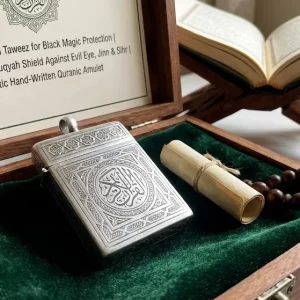
Complete healing path: The Complete Quran Coded Dua — all 114 Surahs & Asma-ul-Husna in one hand-written taweez.
This content and its associated Quranic recitations are offered strictly as a spiritual means (asbab) seeking Allah's guidance, protection, and barakah. Sarkar Healings does not guarantee magical outcomes or instant cures. Spiritual remedies are to be used alongside lawful personal effort and professional medical, legal, or financial advice.