Surah Yaseen (Chapter 36) – Benefits, Virtues & Spiritual Insight
Surah Yaseen is a Makki surah of 83 āyāt (Juz 22‑23) that centres on the certainty of resurrection, the story of the town that rejected its messengers, the signs of Allah in creation, and the creative command كُن فَيَكُونُ (“Be, and it is”). Its authentic virtue is the general reward for reciting the Qurʾān – ten good deeds for every letter – while many popular “specific” virtues (heart of the Qurʾān, recitation over the dying, morning‑recitation ease) rest on weak narrations. Classical scholars such as al‑Ghazālī and Ibn ʿAjība treat Yaseen as a spiritual key to reviving the dead heart, and later devotional practice has made it a go‑to surah for the deceased, for anxiety, and for seeking guidance. This article grades every claimed benefit, cites the evidence honestly, and offers practical, non‑guaranteed ways to engage with the surah.
What the Surah Is About
Surah Yaseen opens with the disjointed letters يٰسٓ and an oath by the “wise Qurʾān” (وَالْقُرْءَانِ الْحَكِيمِ), affirming the Prophet’s messengership (36:1‑3). The core themes unfold in three movements:
- Resurrection & Accountability – Verses 12‑32 stress that the dead will be raised, the records laid open, and every soul recompensed.
- The Town & Its Messengers – Verses 13‑30 recount a community that denied three successive messengers; a believing man from the far side of the city runs to support them (36:20‑27), becoming a paradigm of courageous faith.
- Signs in Creation & Divine Command – Verses 33‑80 point to the revived earth, the alternation of night and day, the ships that sail by Allah’s grace, and the instantaneous creative word كُن فَيَكُونُ (36:82).
The surah closes with a vivid scene of the Day of Judgement (36:81‑83), reinforcing that the same Power who revives barren land can revive hearts.
Authentic Virtues
The only universally authenticated virtue attached specifically to Surah Yaseen is the general reward for Qurʾān recitation: the Prophet ﷺ said, “Whoever recites a letter of the Book of Allah receives a good deed, and a good deed is multiplied tenfold.” This hadith is recorded in Sunan al‑Tirmidhī (ḥadīth 2910) [VERIFY]. Because Yaseen is part of the Qurʾān, every letter recited from it earns that reward. No other *specific* virtue for Yaseen reaches the level of ṣaḥīḥ or ḥasan.
Graded Benefits
| Claimed Benefit | Grade | Evidence / Notes |
|---|---|---|
| General Qurʾān recitation reward – ten good deeds per letter | A | Sunan al‑Tirmidhī 2910 [VERIFY] – authentic (ṣaḥīḥ) chain; applies to every surah, including Yaseen. |
| “Surah Yaseen is the heart of the Qurʾān” | C | Reported in Sunan al‑Tirmidhī 2887 [VERIFY]; graded gharīb (singular) and weak by al‑Albānī and others. Popular but not authentic. |
| Reciting Yaseen over the dying eases the soul / brings a good end | C | Found in Sunan Abī Dāwūd 3121 and Sunan Ibn Mājah 1448 [VERIFY]; chains contain weak narrators. Widely acted upon in practice, but not a prophetic guarantee. |
| Morning recitation of Yaseen brings ease and provision for the day | C | Various weak reports (e.g. in al‑Muʿjam al‑Kabīr of al‑Ṭabarānī) with broken chains; no authentic basis. |
| Devotional practice: reciting Yaseen for the deceased, for anxiety, for guidance/istikhāra | D | Later scholarly and Sufi practice (e.g. al‑Ghazālī, Ibn ʿAjība, al‑Qushayrī). Not traced to a specific hadith; regarded as a recommended *ʿamal* (action) based on the surah’s themes. |
Sufi / Classical Insights
Al‑Ghazālī in Jawāhir al‑Qurʾān calls Yaseen “the heart of the Qurʾān” *by meaning* – not by a hadith – because its central motif is the revival of the dead (both land and hearts). He writes that the surah’s description of the barren earth springing to life (وَآيَةٌ لَّهُمُ الْأَرْضُ الْمَيْتَةُ أَحْيَيْنَاهَا, 36:33) mirrors the spiritual resuscitation of a heart hardened by heedlessness.
Ibn ʿAjība in al‑Baḥr al‑Madīd highlights the “running believer” of 36:20‑27. He notes that the man’s sprint from the far side of the city symbolises the inner *sirr* (secret) that rushes toward truth when the call of revelation arrives. For the seeker, reciting these verses with presence (*ḥuḍūr*) can awaken a similar urgency toward repentance and certainty.
Al‑Qushayrī in Laṭāʾif al‑Ishārāt connects the phrase كُن فَيَكُونُ (36:82) to the *kun* of the spiritual aspirant: “When the servant says ‘Be!’ to his lower self in obedience, the Divine command makes it so.” He advises repeating the verse after Fajr as a *wird* to align the will with the Divine creative word.
These insights are **interpretive** (grade D) – they enrich practice but do not constitute prophetic promises.
How & When to Recite
- Daily Wird – Many scholars recommend a single complete reading after Fajr or ʿIshāʾ. The reward is the generic Qurʾān reward (Grade A).
- For the Deceased – Reciting Yaseen at the graveside or in the home of the bereaved is a *mustahabb* practice (Grade D). It is a means of sending *ṣalawāt* and *duʿāʾ* for the departed; see our hub Surah for the Deceased.
- During Anxiety or Grief – The surah’s vivid imagery of revival can calm the heart. Recite with reflection on 36:33‑36 (revival of dead earth) and 36:58 (peace for the believers). See Surah for Anxiety & Depression.
- For Guidance / Istikhāra – After performing the two‑rakʿah istikhāra prayer, read Yaseen once, then make duʿāʾ. This is a later devotional habit (Grade D); see Surah for Guidance & Istikhāra.
- Etiquette – Be in a state of wu
✦ ✦ ✦
Obtain the Spiritually Prepared Surah Yaseen Taweez for Success
At Sarkar Healings we prepare this taweez and coded dua following the Qur’an and Sunnah described in this guide, with the correct intention and adab.
Or email: help@sarkarhealings.com
Coded Duas based on Surah Ya-Sin
- Sale!
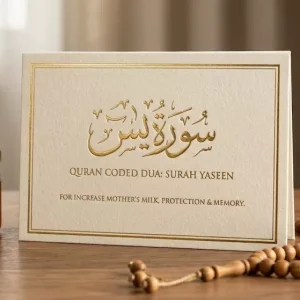
Surah Yaseen Coded Dua for Protection — Quranic Taweez
Original price was: €299.00.€199.00Current price is: €199.00.Add to cart - Sale!

Surah Yaseen Taweez for Anxiety Relief | Hand-Crafted Quranic Dua
Original price was: €299.00.€199.00Current price is: €199.00.Add to cart - Sale!
Surah Yaseen Taweez for Success | Coded Dua for Rizq
Original price was: €299.00.€199.00Current price is: €199.00.Add to cart
Medical & Spiritual Care Notice: Spiritual practices, duas, and taweez items shared on Sarkar Healings are sacred means (*Asbab*) rooted in Quranic tradition, never guarantees. They do not replace professional medical diagnosis, clinical treatment, or lawful effort. If you are experiencing medical or mental health emergencies, please consult a qualified healthcare provider immediately.
- Sale!