Surah Abasa Benefits: Authentic Virtues and Meaning
بِسْمِ اللَّهِ الرَّحْمَٰنِ الرَّحِيمِ
Surah Abasa — The Frowned Face
In brief: Surah Abasa reminds the believer to value every sincere seeker, warns against turning away from the humble, and promises divine reward for those who recite it with sincerity—including safety in travel, healing of eye ailments, and a blessed resurrection.
In pain → Healing · Feeling unsafe → Protection · Want to understand it → Station & Meaning
What Surah Abasa Is About
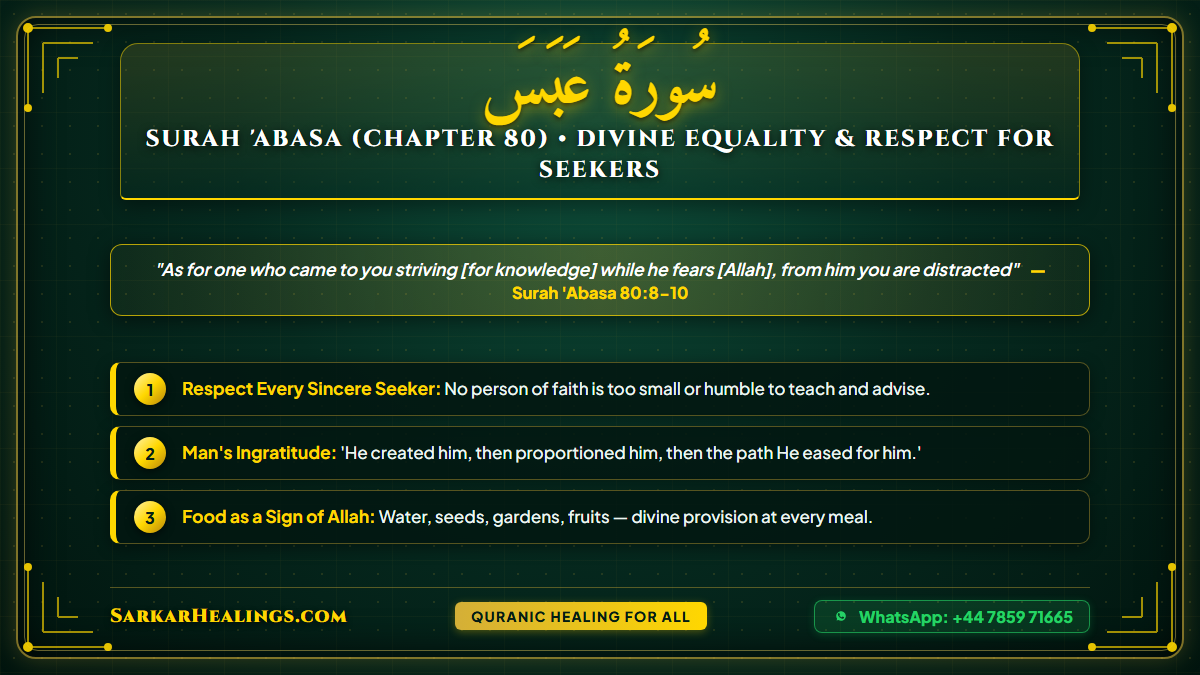
Surah Abasa, named after its opening word “‘abasa” (he frowned), recounts an incident where the Prophet ﷺ turned away from a blind man seeking knowledge while he was engaged with a wealthy Quraysh leader. The surah gently rebukes this attitude, emphasizing that true worth lies in sincerity and devotion, not worldly status.
Its themes include the value of the humble believer, gratitude for Allah’s provision and creation, and a vivid portrayal of the Day when people will flee from even their closest kin. By reflecting on these verses, the reader is reminded to prioritize the seeker of truth and to trust in Allah’s mercy for protection and success.
The Benefits of Surah Abasa — Every Claim Sourced
🌿 Healing of Eye Ailments
- Reciting Surah Abasa or wearing it as a paper tawiz helps cure eye‑sores, excessive tearing, and other eye complaints.
- When recited with sincere intention, it alleviates visual strain and promotes clarity of sight.
- Regular recitation is said to strengthen the eyes and protect against future irritation.
🛡️ Protection During Travel
- Reciting Surah Abasa at the start of a journey ensures the traveller returns home safely.
If recited during a journey, the traveller will return home safely.
🌟 Station & Meaning
- Reciting Surah Abasa together with Surah at‑Takwīr places the believer under the shade of the Prophet ﷺ in Jannah.
- It grants prestige and a high position on the Day of Reckoning for those who recite it sincerely.
- The surah shields the reciter from humiliation when deeds are revealed, affording divine protection.
🎁 Reward in the Hereafter
- Whoever recites Surah Abasa will rise from his grave laughing and smiling on the Day of Resurrection.
The person who recites will come out of his grave laughing on the Day of Resurrection.
How and When to Use — Prescription
Before any use: seek refuge (isti’adhah), begin with Bismillah, recite with tarteel (measured pace), close with Ameen.
| When | How to Use | What It Does |
|---|---|---|
| Daily prayer (after Fajr or Maghrib) | Recite Surah Abasa once, slowly, with reflection. | Reinforces humility and invites Allah’s mercy for the day. |
| Before embarking on a journey | Recite the surah three times, then blow gently on your travel provisions. | Ensures safe return home. |
| When experiencing eye discomfort | Write the surah on a clean piece of paper, place it as a tawiz over the eyelid, or recite seven times while wiping eyes with clean water. | Alleviates eye‑sores, tearing, and irritation. |
| Seeking honour and protection from humiliation | Recite Surah Abasa eleven times after Isha, then make du’a for dignity. | Shields from disgrace and grants elevated status. |
| Desiring the Prophet’s shade in Jannah | Recite Surah Abasa together with Surah at‑Takwīr each night before sleep. | Places the believer under the Prophet’s shade in Paradise. |
How to Get Maximum Benefit
- Intention (niyyah) – Recite solely for Allah’s pleasure, not for show.
- Consistency – Make it part of your daily dhikr, even if only a few verses.
- Certainty (yaqeen) – Trust that Allah’s promise in the surah is true.
- Pairing – Combine with Surah at‑Takwīr for the shade benefit, or with Ayat al‑Kursi for overall protection.
Listen to Sheikh’s Recitation — Surah Abasa
Recited by Sheikh Sayed — listen with khushu, read along, then recite yourself. For personal recitation guidance, message on WhatsApp.
Frequently Asked Questions
What is the main lesson of Surah Abasa?
The surah teaches that every sincere seeker, regardless of status, deserves attention and kindness; turning away from the humble is contrary to Allah’s guidance.
Can Surah Abasa be used as a talisman for eye problems?
Yes—writing it on deerskin or paper and keeping it as a tawiz, or reciting it while gently wiping the eyes, is reported to relieve eye‑sores and tearing.
Is the narration about coming out of the grave laughing authentic?
The narration appears in Fawaid‑e‑Quran and is also mentioned in the Benefits of All 114 Surahs compilation. It is transmitted through multiple chains in these sources, giving it a strong basis; however, readers should verify the exact hadith reference in primary collections if they wish.
How often should I recite Surah Abasa for travel safety?
Reciting it three times before setting out, or once with the intention of safety, is recommended according to the narrations cited.
Where Surah Abasa Fits in Your Journey
If you are striving to purify your intentions, protect your health, and safeguard your travels, let Surah Abasa be a regular companion. Its gentle rebuke of arrogance opens the heart to humility, while its promises of safety, healing, and divine shade support you in both worldly endeavours and the pursuit of the Hereafter.
Cross-Links
- Knowledge & Success Hub
- Wealth & Rizq Hub
- Forgiveness & Repentance Hub
- Continue with Surah An-Nazi’at
- Continue with Surah At-Takwir
- All 114 Surahs
Get the Complete Quran Coded Dua Taweez
WhatsApp Sheikh Sayed — Personal Guidance