Surah Al-Baqarah Benefits: The Fortress Against Shaytan
In brief: Surah Al-Baqarah is the longest surah in the Quran and one of the most authentically virtuous. The Prophet ﷺ said Shaytan flees the house in which it is recited (Sahih Muslim), that it contains the greatest ayah in the Quran — Ayatul Kursi — and that its final two ayahs suffice whoever recites them at night. This is a surah of protection built on sahih evidence, not folklore. Every claim below is graded A–D.
What Surah Al-Baqarah Is About
Al-Baqarah — “The Cow” — is the second and longest surah of the Quran, revealed in Madinah across the early years of the Muslim community, 286 ayahs spanning nearly three juz. It opens by dividing humanity by their response to guidance — the God-conscious, the disbelievers, and the hypocrites — and then lays down the foundations of a believing life: law, covenant, the change of the qiblah, fasting, pilgrimage, marriage and divorce, debt and trade, and the longest ayah in the Quran on recording loans (2:282).
Its name comes from the story of the cow the Israelites were commanded to sacrifice (2:67–73), an episode about obedience without excessive questioning. But the surah’s spiritual centre is elsewhere — in Ayatul Kursi, the Throne Verse (2:255), the single most magnificent statement of Allah’s sovereignty in the Quran; and in its closing two ayahs (2:285–286), a declaration of faith and a supplication so beloved that they were among the two lights never given to any prophet before ﷺ (Muslim 806).
The Authentic Virtues of Surah Al-Baqarah
This surah’s protective reputation rests almost entirely on the strongest grade of narration.
Shaytan flees the house. The Prophet ﷺ said: do not turn your houses into graves; indeed Shaytan flees from the house in which Surah Al-Baqarah is recited (Sahih Muslim 780). A home in which the Quran — and this surah in particular — is recited is a home Shaytan avoids; a home empty of it is like a grave.
Blessing to take it, regret to leave it. The Prophet ﷺ said: recite Surah Al-Baqarah, for taking it is a blessing (barakah), abandoning it is a cause of regret, and the falsehood-mongers (magicians) cannot confront it (Sahih Muslim 804). This is direct evidence for its power against sihr — recited consistently, Al-Baqarah is a shield the practitioners of magic cannot overcome.
Ayatul Kursi — the greatest ayah. The Prophet ﷺ asked Ubayy ibn Ka’b which ayah of the Book of Allah was greatest, and when Ubayy answered “Ayatul Kursi,” the Prophet ﷺ struck his chest and said, “May knowledge be pleasant for you, O Abu al-Mundhir” (Sahih Muslim 810). Its protective virtue is equally authentic: whoever recites Ayatul Kursi when he lies down to sleep will have a guardian from Allah, and no devil will come near him until morning (Bukhari 2311). And whoever recites it after every obligatory prayer, nothing stands between him and Paradise except death (an-Nasa’i, graded sound).
The last two ayahs suffice. The Prophet ﷺ said: whoever recites the last two ayahs of Surah Al-Baqarah at night, they will suffice him (Bukhari 5009, Muslim 807). “Suffice” is understood by the scholars to mean protection from harm that night, or sufficiency in the reward of standing in prayer — a mercy in two short ayahs.
The Benefits of Surah Al-Baqarah — Every Claim Graded
| Claimed benefit | Source | Grade | What you should know |
|---|---|---|---|
| Shaytan flees the house where it is recited | Sahih Muslim 780 | A · Sahih | The core protective virtue. Recite it (or portions, including Ayatul Kursi and the last two ayahs) regularly in the home. |
| Barakah to recite it; magicians cannot overcome it | Sahih Muslim 804 | A · Sahih | Direct evidence for Al-Baqarah as protection against sihr, through consistent recitation. |
| Ayatul Kursi is the greatest ayah in the Quran | Sahih Muslim 810 | A · Sahih | Confirmed by the Prophet ﷺ to Ubayy ibn Ka’b. |
| Ayatul Kursi before sleep: a guardian till morning | Bukhari 2311 | A · Sahih | A guardian from Allah, and no devil approaches until morning. A cornerstone of the nightly adhkar. |
| Ayatul Kursi after every fard prayer: nothing but death between you and Paradise | an-Nasa’i — graded sound | A · Sahih | A simple, powerful daily practice after the five prayers. |
| The last two ayahs suffice whoever recites them at night | Bukhari 5009; Muslim 807 | A · Sahih (agreed upon) | Protection and sufficiency in two short ayahs (2:285–286). |
| Fixed numeric-count formulas for specific worldly outcomes | Folk manuals | D · No authentic basis | Counted rituals for particular results are not from the authentic Sunnah. The sahih virtues above are more than sufficient. |
Our grading in one line: A = sahih/hasan hadith · B = Quranic theme or agreed classical scholarship · C = weak (da’if) narration, stated as such · D = later devotional practice, clearly labelled. We never present C or D material as prophetic guarantee.
Ayatul Kursi — The Heart of the Surah’s Protection
If Al-Baqarah is the fortress, Ayatul Kursi (2:255) is its keep. In a single ayah it declares the living, self-sustaining sovereignty of Allah: He is al-Hayy al-Qayyum, the Ever-Living, the Sustainer of all; slumber does not seize Him nor sleep; to Him belongs everything in the heavens and the earth; none can intercede except by His leave; His knowledge encompasses all things; His Throne extends over the heavens and the earth, and preserving them does not tire Him. The scholars observed that the protective power of the ayah flows directly from its content: to affirm, wholeheartedly, that Allah alone holds all power is itself the deepest refuge, because it leaves no power for the whisperer to appeal to.
This is why the practices around it are so strongly emphasised: recited at night, it posts a guardian over you until morning (Bukhari 2311); recited after each obligatory prayer, it keeps the door to Paradise a single step away (an-Nasa’i). A believer who does nothing more than add Ayatul Kursi to the nightly adhkar and to the end of each prayer has taken up two authentically-established shields at almost no cost of time.
Insights From the Sufi and Classical Scholars
Al-Qushayri, in Lata’if al-Isharat, reads Ayatul Kursi as the servant’s declaration of his own poverty before the divine richness: every attribute the ayah affirms of Allah — life, self-sufficiency, unwearying power, all-encompassing knowledge — is precisely what the servant lacks and Allah alone possesses. To recite it is to relocate all reliance away from oneself and onto the Qayyum, the One who sustains without ever needing to be sustained. In that relocation, he notes, is the true safety the ayah promises: the heart that leans entirely on Allah has nothing left in it for fear to grip.
Ibn Ajiba, in al-Bahr al-Madid, draws the seeker’s attention to the surah’s closing supplication (2:286): لَا يُكَلِّفُ اللَّهُ نَفْسًا إِلَّا وُسْعَهَا — “Allah does not burden a soul beyond its capacity.” For the people of tasawwuf this is a foundation of hope: every trial is measured to the strength Allah has already placed in you, and the very fact that you are being tested is proof you have been given what it takes to bear it. The believers’ response — “we hear and we obey; grant us Your forgiveness” (2:285) — is, for Ibn Ajiba, the summit of the servant’s station: total surrender met by total mercy.
Imam al-Ghazali’s teaching on the remembrance of Allah in the Ihya illuminates why a surah’s recitation drives Shaytan from a home: the devil’s foothold is heedlessness (ghaflah), and the recitation of Al-Baqarah fills the space heedlessness would occupy. A house alive with the Quran is not protected by the sound of the words as a charm, but by the presence of Allah that consistent recitation invites — and where He is remembered, the whisperer finds no room.
How and When to Recite Surah Al-Baqarah
Few people recite all 286 ayahs daily, and that is not required to benefit. The authentic practice is layered, and you can adopt it in stages. At minimum: recite Ayatul Kursi after every obligatory prayer and before sleep, and recite the last two ayahs (2:285–286) at night. This alone secures several of the surah’s strongest virtues in a few minutes a day.
Beyond that, keep the surah alive in the home — recite a portion regularly, or play and follow a recitation, so the house does not become “like a grave” (Muslim 780). Reciting the full surah over three days, completing it across the week, or reciting it against sihr and persistent disturbance (Muslim 804) are all well-founded practices. What ties them together is consistency: Al-Baqarah rewards the household that returns to it, not the one that recites it once for a result.
Where Surah Al-Baqarah Fits in Your Healing Journey
- Protection & Safety Hub — Al-Baqarah and Ayatul Kursi as the home’s authentic shield.
- Enemies & Justice Hub — the surah magicians cannot overcome (Muslim 804).
- Anxiety & Distress Hub — the reassurance of 2:286, that no soul is burdened beyond its capacity.
Frequently Asked Questions
Does Surah Al-Baqarah really keep Shaytan away from the house?
Yes, authentically. The Prophet ﷺ said Shaytan flees from the house in which Surah Al-Baqarah is recited, and warned against turning homes into graves empty of Quran (Sahih Muslim 780). Regular recitation — including Ayatul Kursi and the last two ayahs — keeps the home under this protection.
What is the greatest ayah in the Quran?
Ayatul Kursi (2:255). When the Prophet ﷺ asked Ubayy ibn Ka’b which ayah was greatest and he answered “Ayatul Kursi,” the Prophet ﷺ affirmed it and congratulated him on his knowledge (Sahih Muslim 810).
What is the benefit of reciting Ayatul Kursi before sleep?
Whoever recites Ayatul Kursi when going to bed will have a guardian from Allah, and no devil will approach him until morning (Bukhari 2311). It is one of the most emphasised parts of the nightly adhkar.
Can Surah Al-Baqarah protect against black magic (sihr)?
Yes. The Prophet ﷺ said that the practitioners of falsehood — the magicians — cannot confront or overcome Surah Al-Baqarah (Sahih Muslim 804). Consistent recitation in the home is an authentically-grounded protection against sihr.
Spiritual practice complements — it never replaces — medical care, professional counsel, or lawful effort. If you or a loved one is seriously ill or in crisis, please seek qualified help first.
Continue Your Journey Through the 114
Every surah of the Quran, mapped to its authentic virtues and its place in your life — with the evidence graded honestly. Browse all 114 surahs or read Surah Al-Fatiha — the Opening and the Cure.
Obtain the Spiritually Prepared Surah Al
At Sarkar Healings we prepare this taweez and coded dua following the Qur’an and Sunnah described in this guide, with the correct intention and adab.
Or email: help@sarkarhealings.com
Coded Duas based on Surah Al-Baqarah
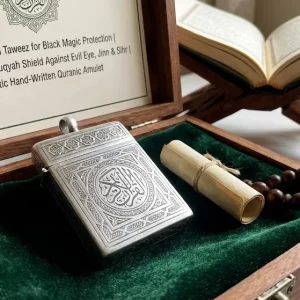
This content and its associated Quranic recitations are offered strictly as a spiritual means (asbab) seeking Allah's guidance, protection, and barakah. Sarkar Healings does not guarantee magical outcomes or instant cures. Spiritual remedies are to be used alongside lawful personal effort and professional medical, legal, or financial advice.